
Vietnam Tightens Cybersecurity Clearance for IoT Claw Machines
Author
Date Published
Reading Time
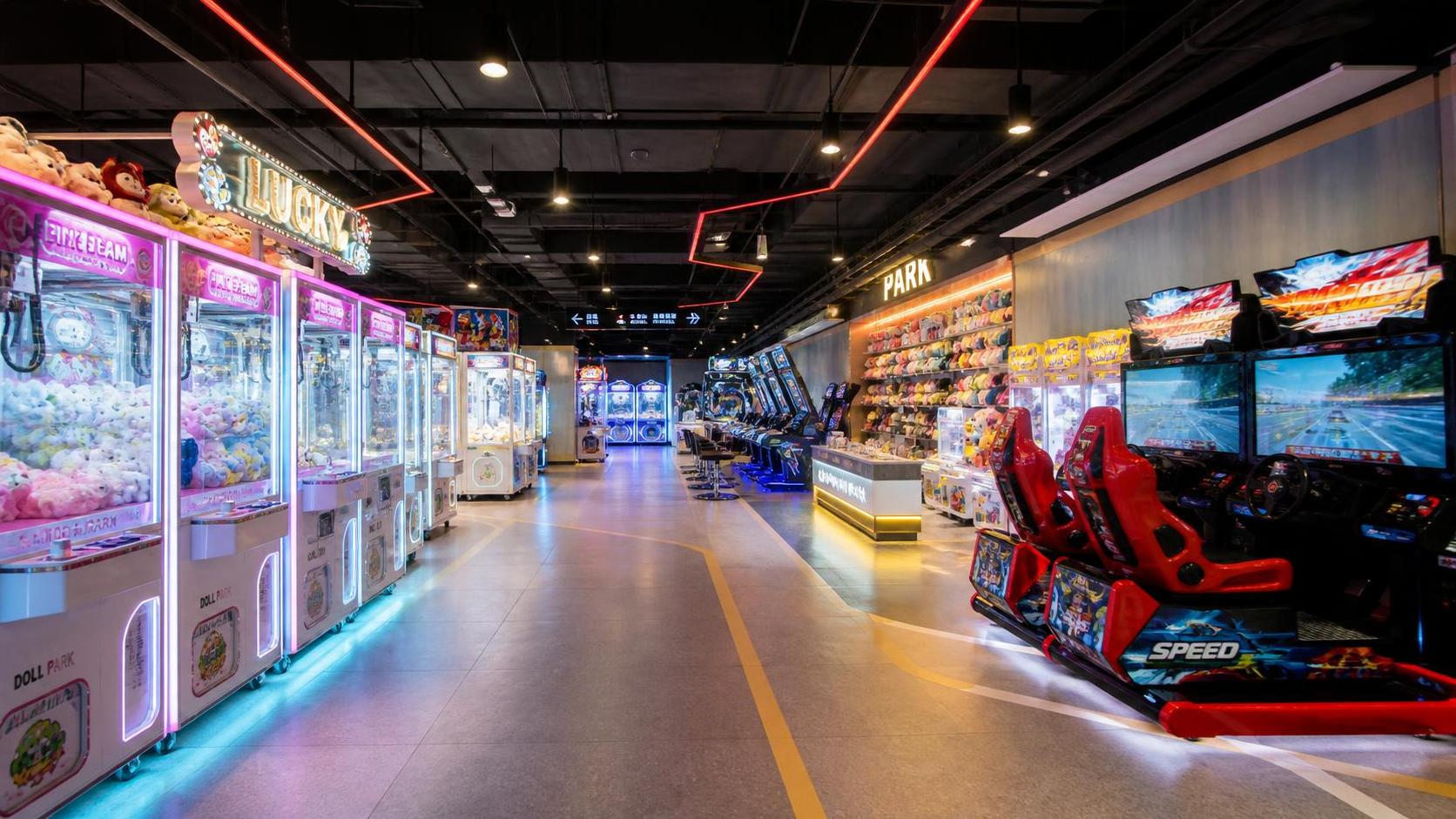
On June 16, 2026, a new import compliance change in Vietnam drew immediate attention from the arcade equipment and connected device trade. According to the user-provided event summary, IoT crane claw machines with Wi-Fi, Bluetooth, or NFC functions now face an added cybersecurity certification requirement tied to Vietnam’s MIC, and earlier CE or FCC certificates no longer provide automatic exemption. For importers, exporters, manufacturers, certification-related service providers, and delivery planners, the development matters not only because of the rule change itself, but because it has already been associated with port delays and longer delivery cycles.
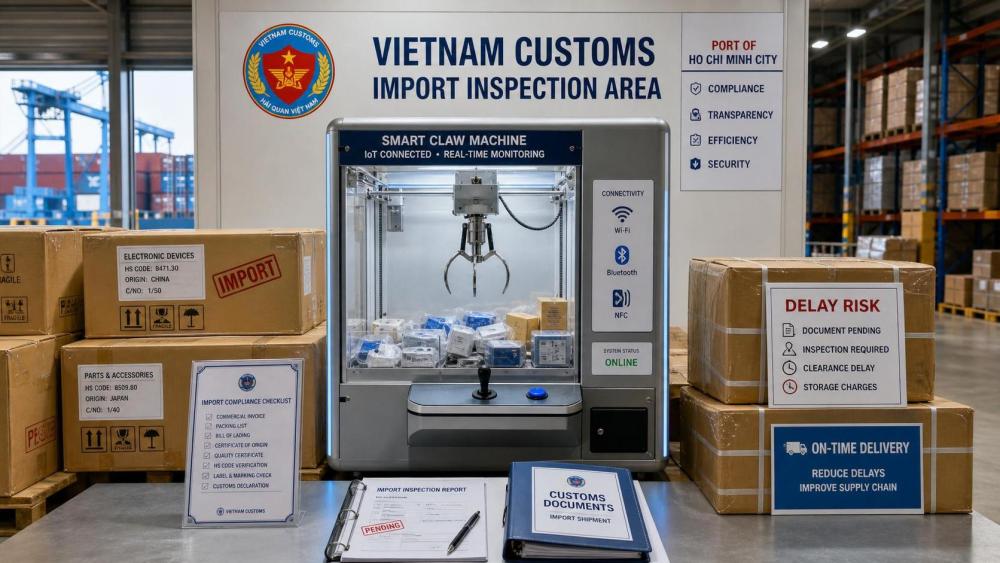
A certification requirement has become an immediate import condition
Based on the provided information, Vietnam’s Ministry of Industry and Trade issued an urgent notice on June 16. From that date, all imported IoT crane claw machines with Wi-Fi, Bluetooth, or NFC connectivity must additionally submit Vietnam MIC cybersecurity certification identified as VN-CyberSec.
The same summary states that CE and FCC certificates are no longer automatically accepted as exemptions for this requirement. It also states that multiple batches of Chinese smart claw machines have already been held at Ho Chi Minh City ports pending inspection, with average delivery schedules extended by 12 to 18 days.
Where the pressure is likely to appear first in the business chain
Export and import transactions may face a new document checkpoint
From an industry perspective, companies directly handling cross-border shipments are likely to feel the change first because the new requirement is tied to import submission rather than only to product marketing language. The practical impact may appear in shipment readiness, customs-facing paperwork preparation, and whether product files clearly show the machine’s connected functions and corresponding certification status.
Manufacturers of connected claw machines may need to revisit compliance sequencing
For manufacturers, the issue is not only product design but also when compliance work is completed in relation to shipment. Observably, machines marketed as smart or connected may now need certification planning that specifically addresses the Vietnam import stage, rather than relying on CE or FCC documentation as sufficient for smooth entry.
Procurement and delivery teams may need to reassess lead-time assumptions
For buyers, distributors, and project procurement teams, the reported 12 to 18 day delivery extension is a concrete operational signal within the provided facts. That does not by itself define a permanent timeline, but it does suggest that purchasing schedules, installation planning, and contract delivery expectations may need closer review where connected claw machines are involved.
Certification and testing service providers may see a shift in client demand
Certification-related firms and technical documentation support providers may also be affected because clients are likely to ask more specifically about Vietnam MIC cybersecurity documentation, product scope screening, and the limits of using CE or FCC files in place of local requirements. Analysis shows that the commercial value here is less about generic testing support and more about correctly identifying whether a given machine configuration falls within the new import condition.
What companies should watch in the near term
Review which models are treated as connected devices
Companies should first check whether their claw machine models include Wi-Fi, Bluetooth, or NFC functions, because the provided event summary ties the new requirement directly to those connectivity features. This is especially relevant for product catalogs that mix standard and smart variants under similar commercial names.
Recheck submission files before shipment release
What deserves closer attention is whether existing shipment files still assume that CE or FCC certificates can clear the relevant compliance threshold on their own. The summary indicates that automatic exemption no longer applies, so exporters and importers should closely examine technical files, product declarations, and any certification pack prepared for customs or local review.
Monitor execution wording rather than assuming a stable practice
Because the input does not provide detailed enforcement guidance, companies should treat current implementation as a point requiring continued observation rather than as a fully settled operating framework. In practical terms, that means watching for further official wording, consistency in inspection practice, and any clarification around the exact certification submission pathway.
Adjust delivery and procurement commitments with caution
Analysis shows that the immediate business risk is less about headline policy language and more about timetable disruption. Where contracts, tenders, or customer rollouts involve connected claw machines for Vietnam, firms may need to build additional buffer into shipping and acceptance planning until execution becomes clearer.
How this signal is best understood right now
This development is more appropriate to understand as an already active compliance signal rather than a distant policy discussion, because the provided summary links the rule change to current port holds and longer delivery periods. At the same time, it should not yet be treated as a fully mapped enforcement framework, since the input does not include detailed procedural guidance, transition arrangements, or a fuller explanation of how the requirement will be applied across different product configurations.
From an industry perspective, the most important takeaway is that connectivity features in arcade equipment are now more directly tied to import compliance risk. That shifts attention from general product certification toward market-specific cybersecurity clearance and execution at the border.
A rule change with immediate operational meaning
In summary, the June 16 notice points to a concrete compliance shift for imported IoT crane claw machines entering Vietnam. The confirmed facts support a cautious reading: this is not only a policy statement, but an operational change already associated with delayed clearance and longer delivery timing. It is more appropriate to understand the event as an implemented rule signal that now requires close follow-up on certification practice, shipping preparation, and market-side execution.
Basis of this article and what still needs verification
This article is generated from the user-provided news title, event date, and event summary. For developments of this kind, relevant source types usually include official notices, publications from regulatory bodies, customs or trade administration information, industry association updates, standards-related documents, and reporting by authoritative media. A specific official source link was not provided in the input, so the exact official text and subsequent implementation details still require ongoing verification. Continued attention should be paid to later policy clarification, certification interpretation, tender document changes, market feedback, and how companies are executing against the new requirement in practice.
Related News
 FEC Capital & Yield per Sq.FtHow to Calculate VR Amusement Venue ROI Before Investing in a Free-Roam AttractionVR amusement venue ROI: learn how to model capital costs, sellable sessions, operating expenses, break-even points, and payback before investing in a free-roam attraction.
 Precision Slate Billiard TablesHow Camera Scoring for Billiards Improves Match Accuracy and Player ExperienceCamera scoring for billiards improves match accuracy, reduces disputes, and creates a smoother player experience. Explore smarter scoring, integration, and venue-ready setup insights.
 Direct Drive Wheels & PedalsHow Dynamic Force Feedback Steering Improves Realism in Racing SimulatorsDynamic force feedback steering makes racing simulators more realistic with responsive torque, grip cues, low-latency control, and safer, immersive driving feedback.
 Multiplayer VR Free-RoamHow to Select a High-Immersion Motion Platform for Location-Based VR AttractionsHigh-immersion motion platforms: learn how to match motion quality, VR content, safety, throughput, and maintenance for profitable location-based VR attractions.
 Multiplayer VR Free-RoamHow Malls Can Evaluate VR Free-Roam Arenas for Footfall, Dwell Time, and ROIVR free-roam arenas for malls: learn how to assess footfall, dwell time, throughput, operating costs, and ROI for a profitable leisure investment.
 Interactive Prize VendingHow to Select Smart Prize Systems for Higher FEC Redemption RevenueSmart prize systems help FECs increase redemption revenue, streamline inventory, reduce queues, and create better guest experiences. Discover key selection strategies.
 FEC Capital & Yield per Sq.FtHow to Select Family Entertainment Center Equipment for Your Floor Plan and Revenue MixFamily entertainment center equipment selection made smarter: align floor plans, guest flow, capacity, utilities, and revenue mix to create a profitable, flexible venue.
 Direct Drive Wheels & PedalsWhat Determines Direct Drive Motor Prices for Arcade Racing Simulators?Direct Drive motors price depends on torque, encoders, controllers, durability, and support. Learn how to compare arcade racing simulator systems for better value.
 CE/FCC & IoT Data SecurityCE Certification for Amusement Equipment: Tests, Documents, and EU Market AccessAmusement equipment certification Europe: discover CE tests, technical documents, safety standards, and practical steps for confident EU market access.
 Interactive Wall Projection SportsInteractive Sports Entertainment Systems: Key Selection Criteria for FECsInteractive sports entertainment systems: discover key FEC selection criteria for player flow, revenue, maintenance, integration, safety, and guest appeal.
 CE/FCC & IoT Data SecurityEntertainment Technology Export: CE, FCC, and IoT Compliance for Global SalesEntertainment technology export made simpler: learn how CE, FCC, and IoT compliance support safer global sales, connected systems, and market-ready deployment.
 FEC Capital & Yield per Sq.FtHow Arcade Data Analytics Software Improves FEC Revenue per Square FootArcade data analytics software helps FECs increase revenue per square foot by reducing downtime, optimizing game mix, pricing, payouts, and floor-space performance.
 FEC Capital & Yield per Sq.FtWhat Is a Healthy Arcade Venue Revenue per Square Foot? Benchmarks and DriversVenue Revenue Per Square Foot arcade benchmarks explained: compare productive space, costs, machine yield, and key drivers to build a healthier, more profitable venue.
 Multiplayer VR Free-RoamMultiplayer Headset Integration Technology: Syncing Audio, Tracking, and SessionsHeadset Integration Technology multiplayer solutions synchronize audio, tracking, and sessions to improve VR venue safety, uptime, and player experiences.
 FEC Capital & Yield per Sq.FtHow to Evaluate a Networked Arcade Machine for Multi-Location FEC OperationsNetworked arcade machine evaluation guide for multi-location FECs: assess connectivity, cashless integration, remote controls, uptime, and scalable deployment.
 String Pinsetter BowlingHow to Evaluate a Bowling System Technology Supplier for FEC ProjectsBowling system technology supplier guide for FEC projects: evaluate integration, scoring, service support, compliance, and total operating cost.
 FEC Capital & Yield per Sq.FtHow Arcade Data Analytics Helps FEC Operators Improve Revenue per Square FootArcade data analytics helps FEC operators raise revenue per square foot by optimizing machine mix, pricing, uptime, payouts, and guest flow.
 6-DOF Racing SimulatorsHow Telemetry Systems Improve Driver Feedback in Immersive Racing SimulatorsImmersive racing systems telemetry transforms live vehicle data into precise steering, pedal, motion, and haptic feedback—helping operators deliver realistic, reliable, and engaging driver experiences.
 CE/FCC & IoT Data SecurityBuying Arcade Machines in Germany: CE Compliance, VAT, and Venue FitArcade machine Germany buying guide: understand CE compliance, VAT, landed costs, payment systems, venue fit, and service planning before you invest.
 Flight & Mech SimulatorsDigital Simulation Systems: Validating Performance Before Physical PrototypingDigital simulation technology systems help validate performance, safety, controls, and user experience before physical prototyping—reducing risks, rework, and costs.
 FEC Capital & Yield per Sq.FtArcade Profit Optimization Strategy: How FEC Owners Improve Yield per Sq.FtArcade profit optimization strategy for FEC owners: learn how to boost yield per sq.ft through smarter layout, payout control, uptime analysis, and better equipment mix.
 FEC Capital & Yield per Sq.FtArcade Equipment Supplier Trends: What FEC Buyers Should Watch in 2025Arcade equipment innovation supplier trends in 2025 reveal what FEC buyers must watch: connected systems, software stability, mechanical reliability, and smarter supplier selection.
 Multiplayer VR Free-RoamHow Real Time Motion Capture Technology Improves Immersive VR AttractionsReal time motion capture technology helps VR attractions boost immersion, reduce latency issues, improve multiplayer interaction, and support smoother venue operations.
 Multiplayer VR Free-RoamHow to Choose Commercial VR Arena Software for Multiplayer Free-Roam VenuesCommercial VR arena software buyer guide: learn how to compare tracking, multiplayer stability, operator workflow, hardware fit, and support for profitable free-roam venues.
 Spatial Computing & 6-DOFHow Real Time Simulation Technology Improves Training Accuracy in VR AttractionsReal time simulation technology helps VR attractions improve training accuracy, reduce faults, and strengthen safety, uptime, and guest experience—see how smarter training boosts venue performance.
 FEC Capital & Yield per Sq.FtHow to Evaluate Venue Investment ROI: Traffic, CapEx, Payback, and Yield per Sq.FtVenue Investment Analysis made practical: learn how to assess traffic quality, CapEx, payback, and yield per sq.ft to spot profitable venues, reduce risk, and invest with confidence.
 6-DOF Racing SimulatorsHow to Fix Racing Simulator Telemetry Synchronization Issues in 6-DOF Motion SetupsRacing simulator telemetry synchronization issues in 6-DOF setups? Learn how to diagnose latency, filters, mapping, network, and mechanical faults for smoother, more accurate motion.
 FEC Capital & Yield per Sq.FtHow to Evaluate Amusement Equipment Suppliers for FEC Safety, Support, and ROIAmusement equipment suppliers can make or break FEC safety, uptime, and ROI. Learn how to compare compliance, support, reliability, and lifecycle value before you buy.
 Multiplayer VR Free-RoamHow to Evaluate VR Free-Roam Matrices for Multiplayer Arena Design?VR free-roam matrices for multiplayer arenas: learn how to compare tracking stability, safety logic, latency, software fit, and reset efficiency before choosing a reliable commercial system.
 Interactive Prize VendingWhat Is a Ticket Redemption Prize Machine and How It Works in Family Entertainment CentersTicket redemption prize machine explained: learn how it works in family entertainment centers, how payouts and prizes drive ROI, and what operators should evaluate before buying.

Related News
- 00
0000-00
How to Calculate VR Amusement Venue ROI Before Investing in a Free-Roam Attraction - 00
0000-00
How Camera Scoring for Billiards Improves Match Accuracy and Player Experience - 00
0000-00
How Dynamic Force Feedback Steering Improves Realism in Racing Simulators - 00
0000-00
How to Select a High-Immersion Motion Platform for Location-Based VR Attractions - 00
0000-00
How Malls Can Evaluate VR Free-Roam Arenas for Footfall, Dwell Time, and ROI
Amusement Terminal Architect
Strategic Intelligence Center