
EU Ends €150 Duty Relief, Raising Import Costs
Author
Date Published
Reading Time
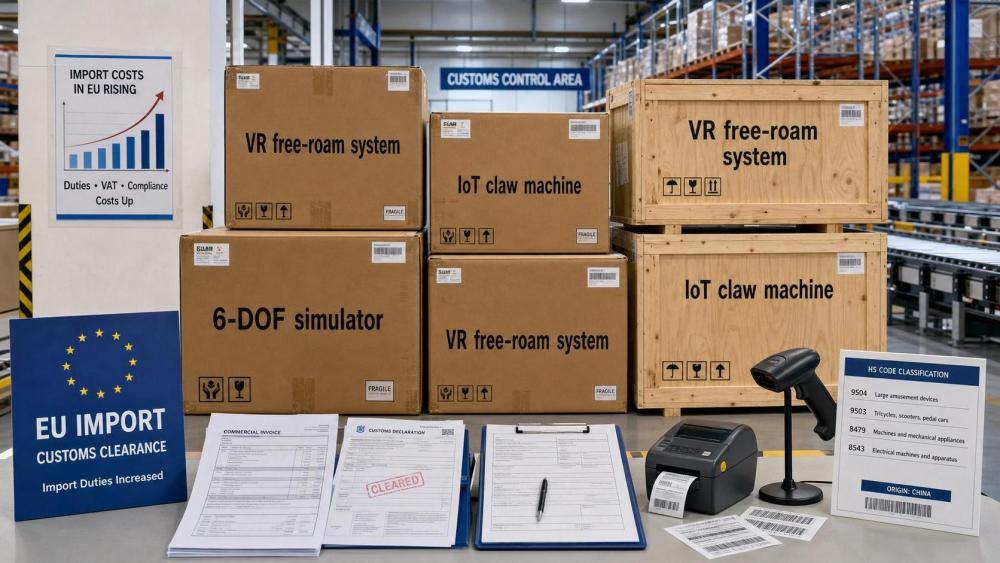
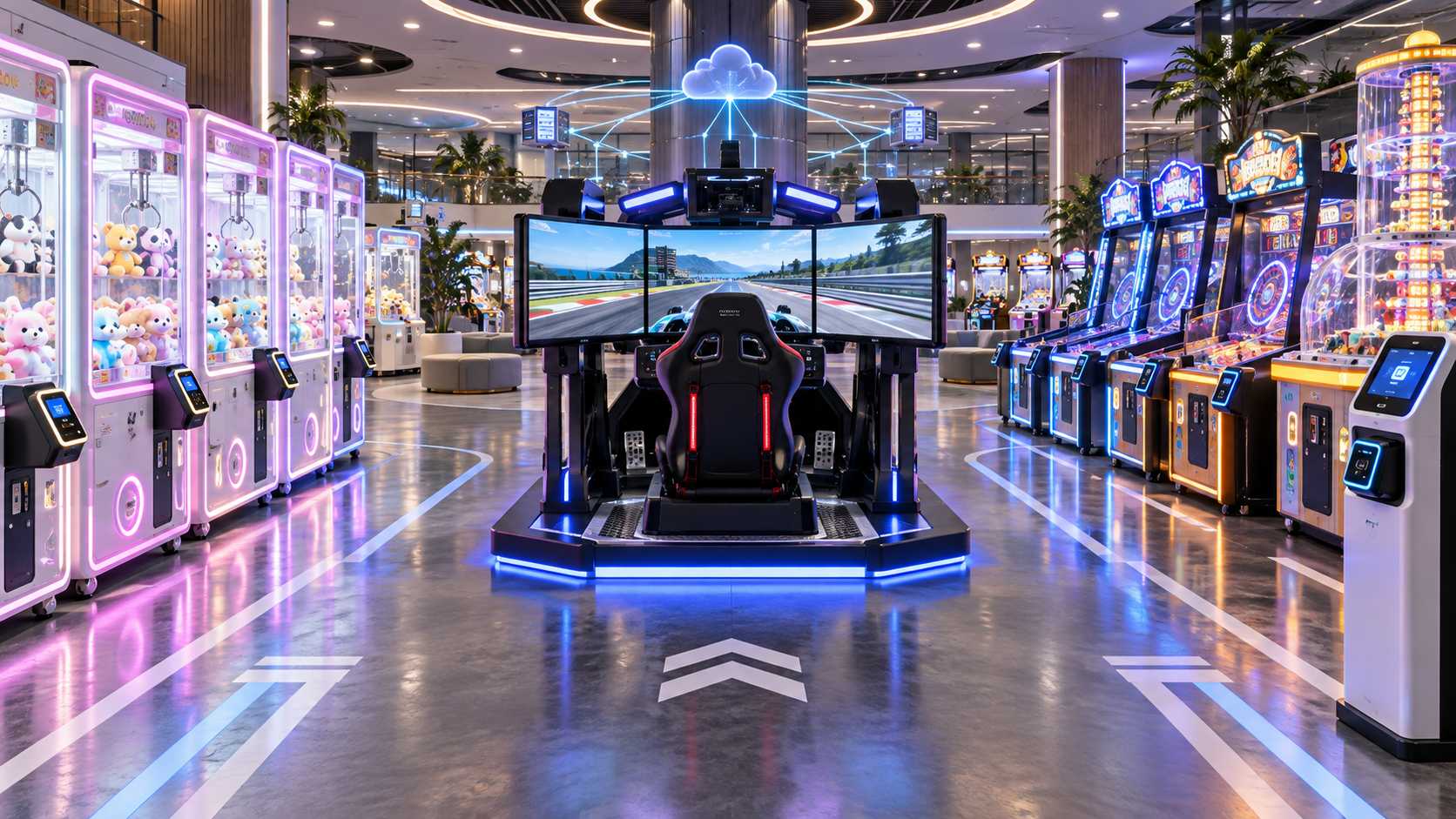
On July 1, 2026, the EU formally ends the duty exemption for low-value parcels under €150, a change that immediately matters to companies moving entertainment equipment into the region. For importers, distributors, supply chain service providers, and buyers of category-dense products such as IoT claw machines, VR free-roam systems, and 6-DOF simulators, the issue is not only higher clearance cost but also a shift in how quotations, tax treatment, and customs planning need to be structured.
What the rule change confirms
According to the information provided, the policy takes effect on July 1, 2026 under Regulation (EU) 2026/382. From that date, the EU removes the customs duty exemption previously applied to inbound low-value parcels below €150.
For entertainment equipment entering the EU, a fixed duty of €3 per HS code line will apply during a transition period running until June 2028. The same information also indicates that importers not registered under IOSS may face an expanded VAT tax base risk.
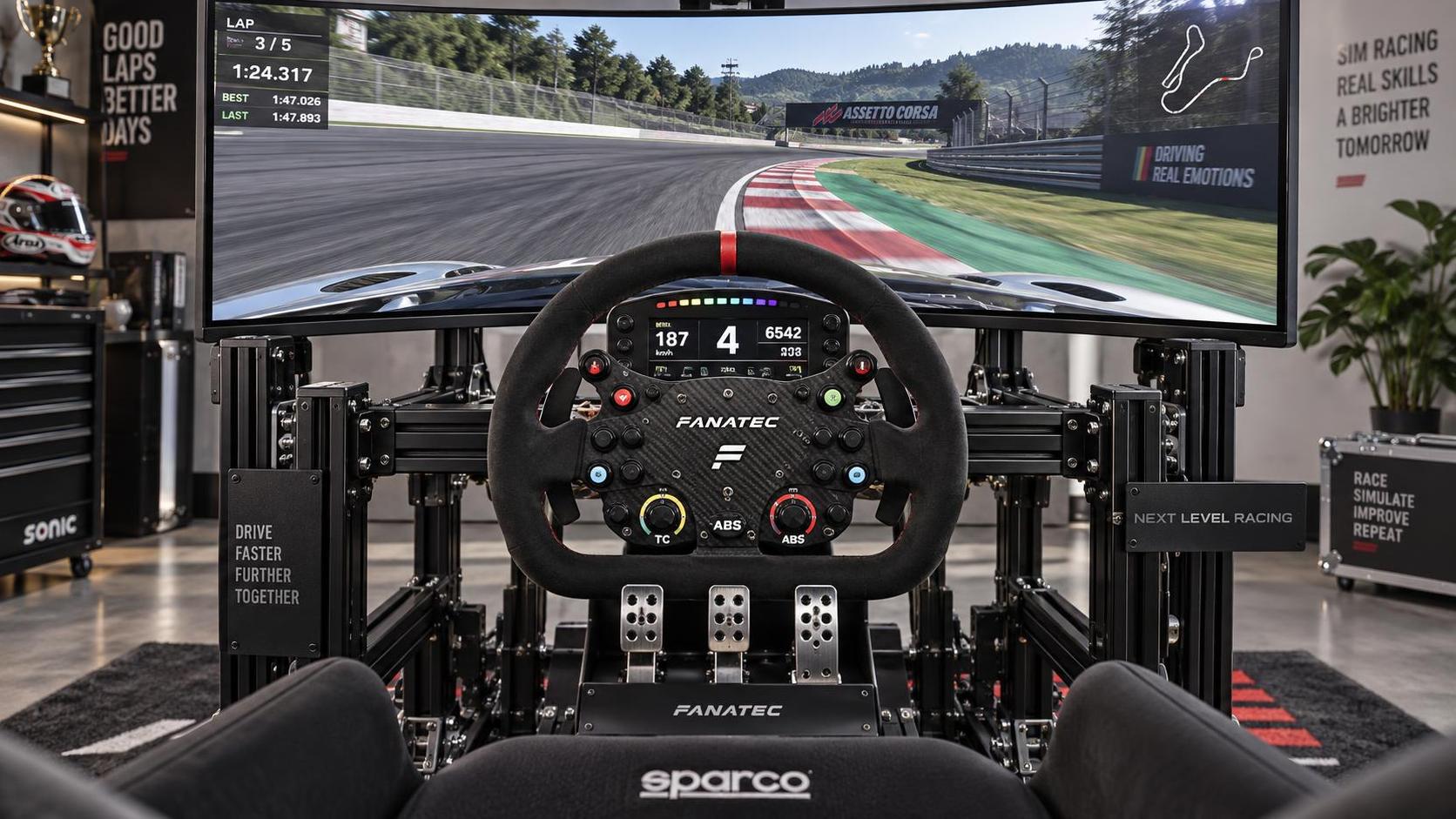
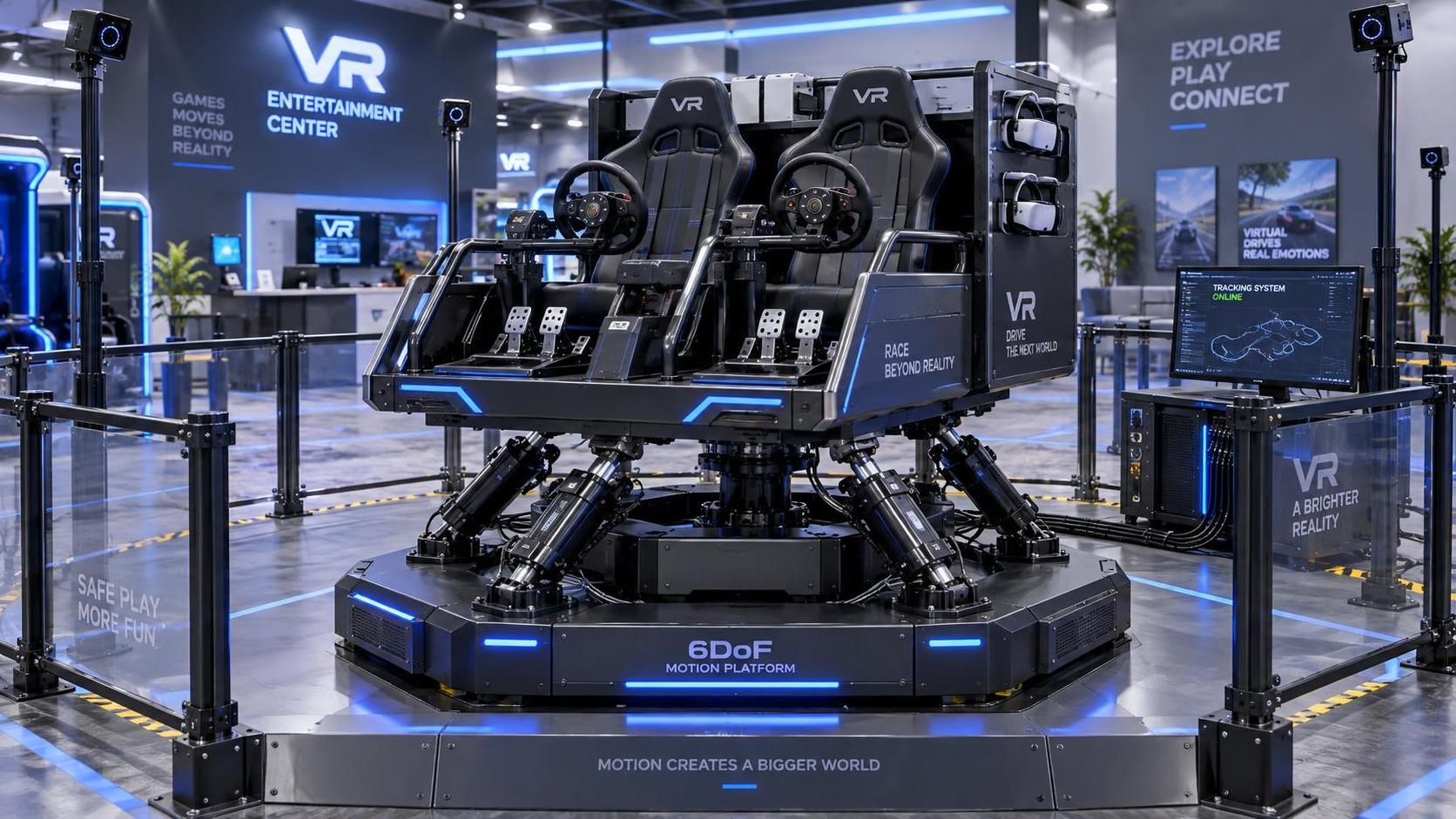
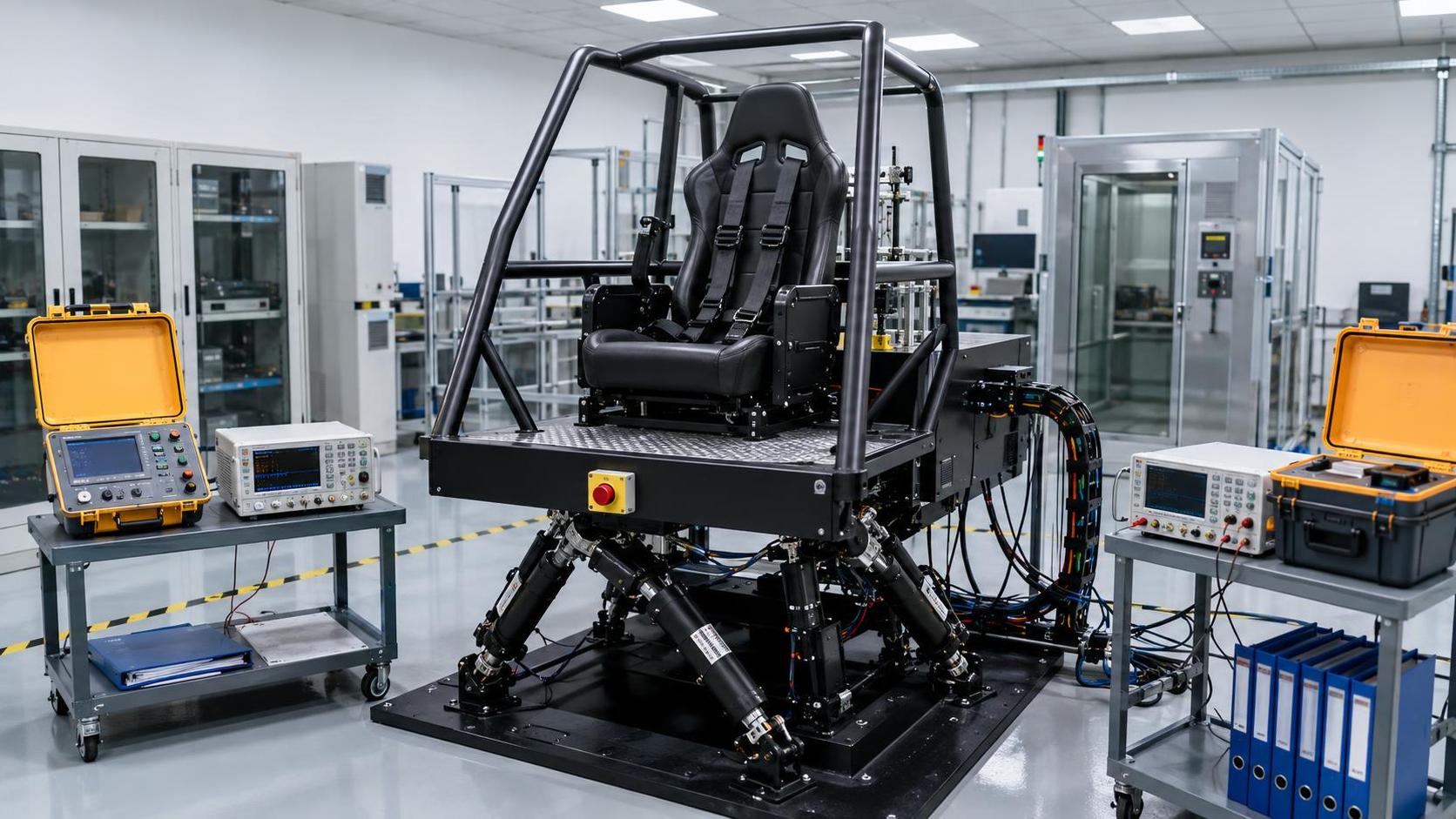
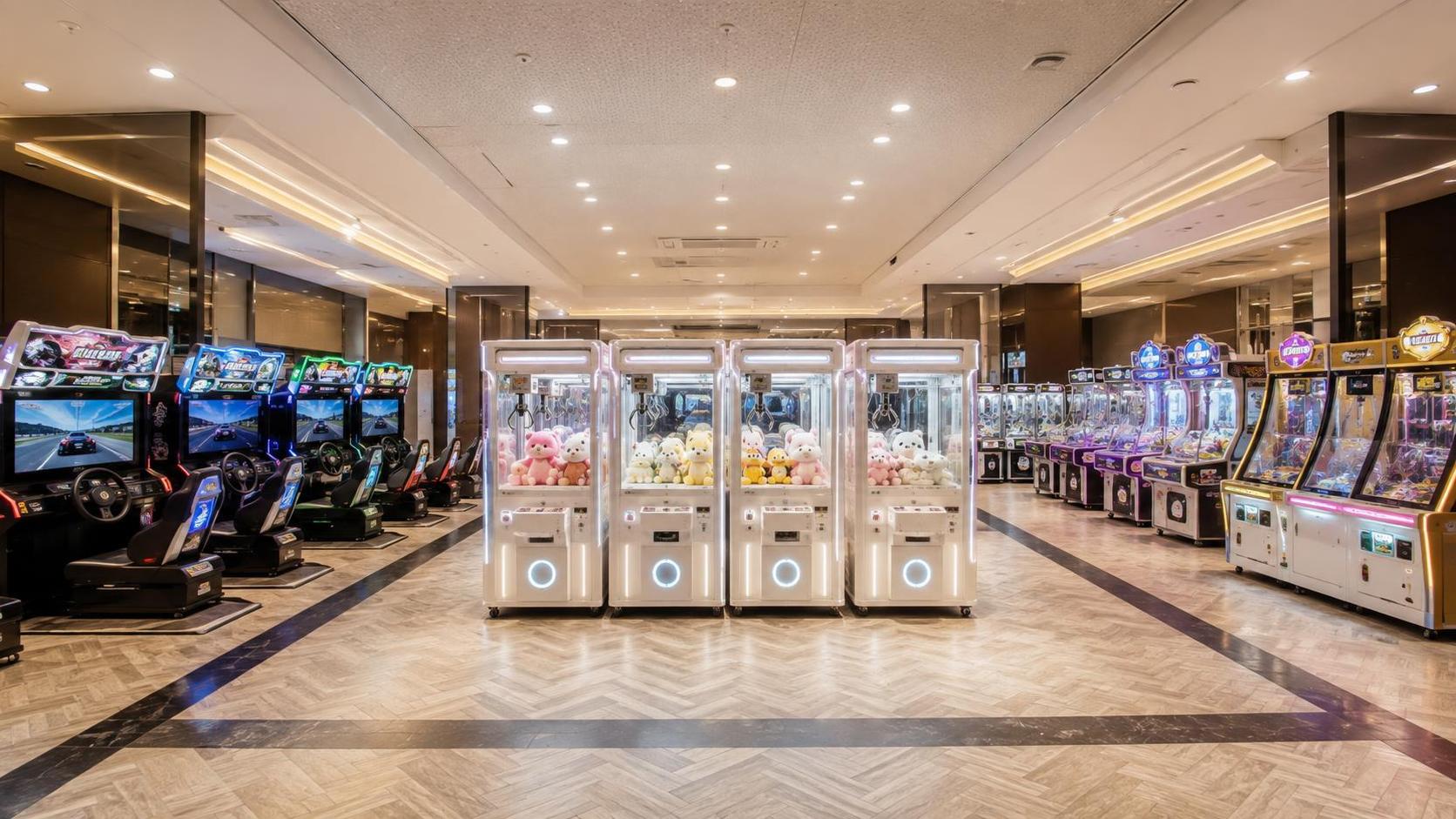
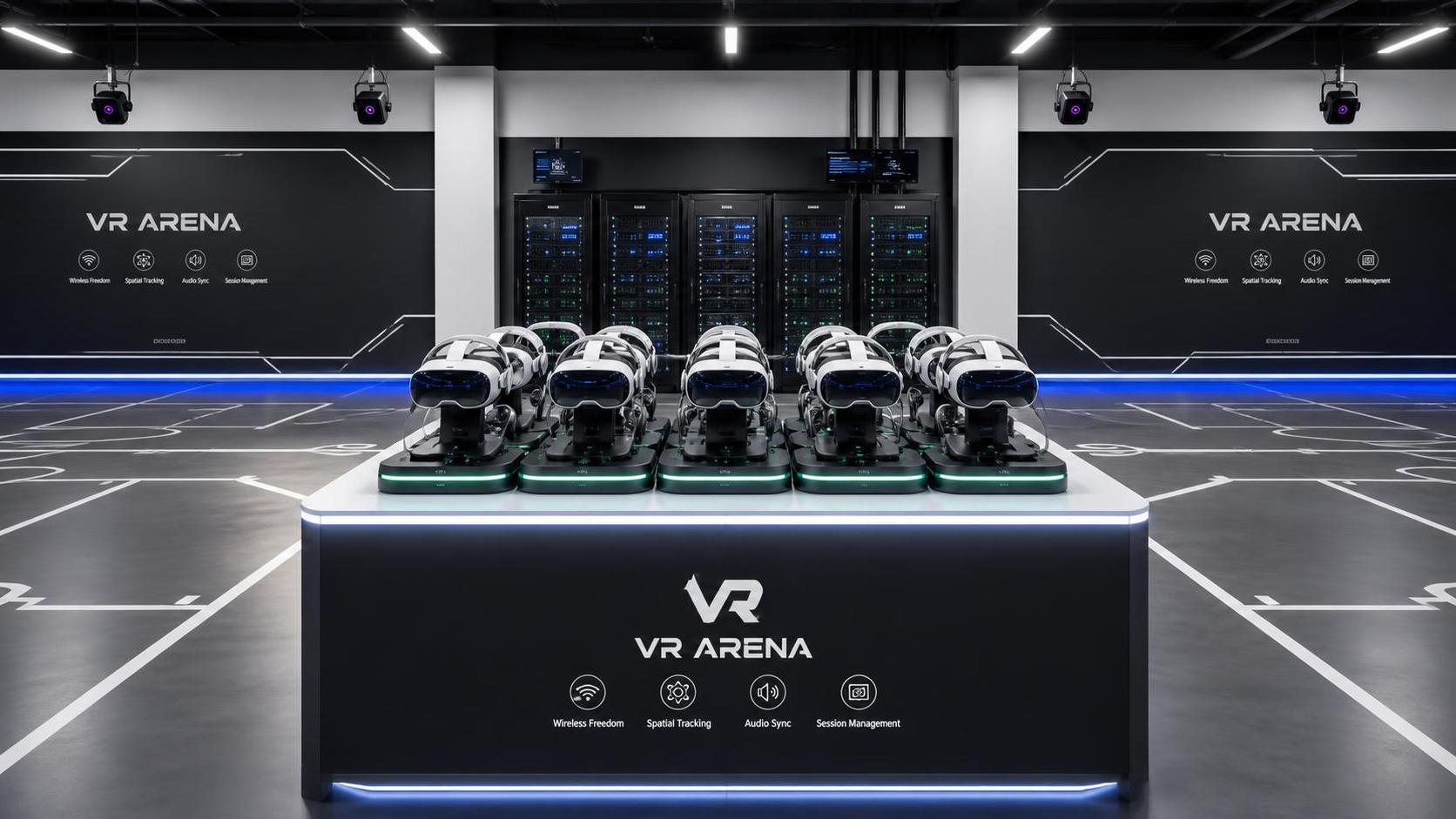
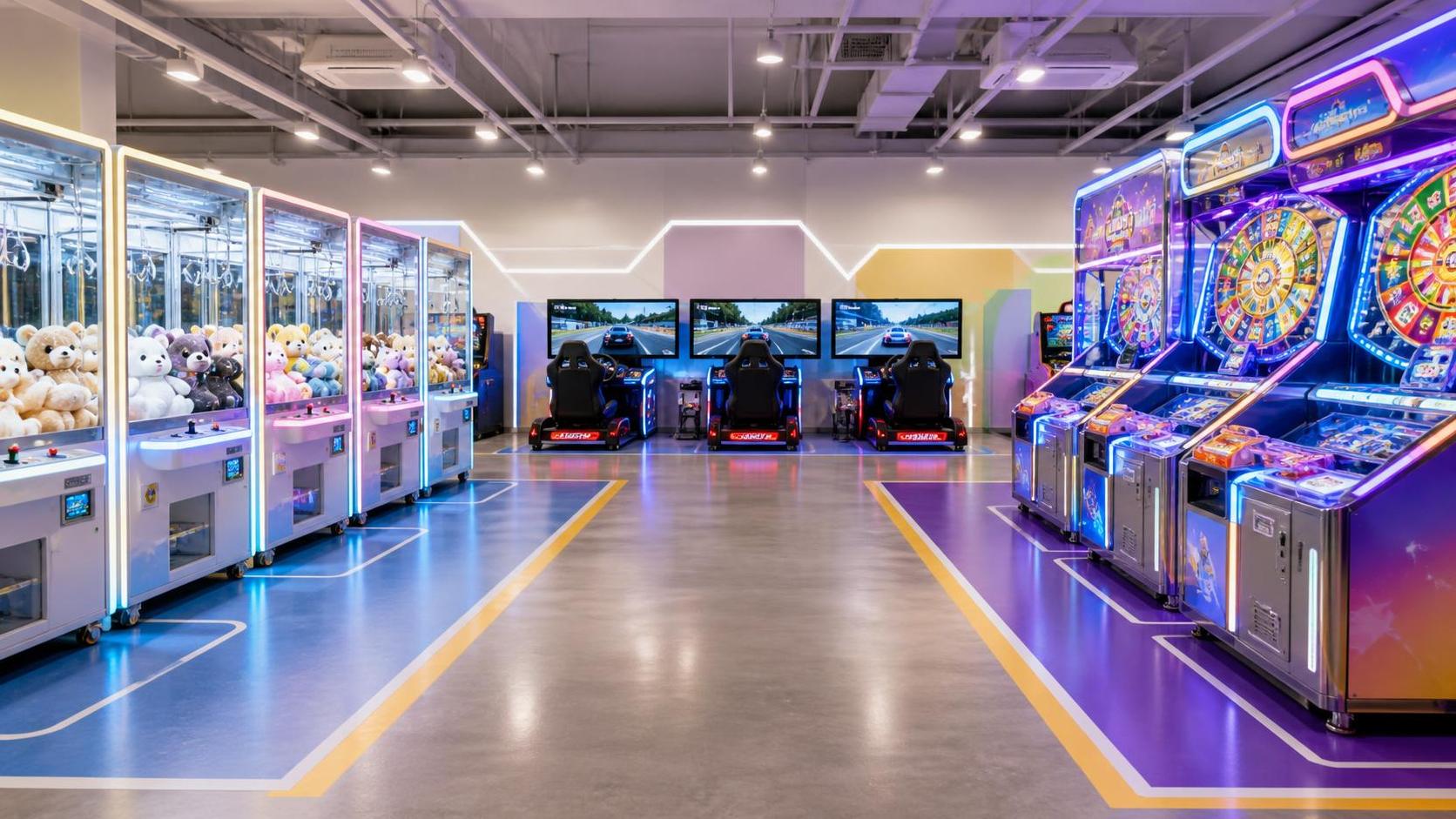
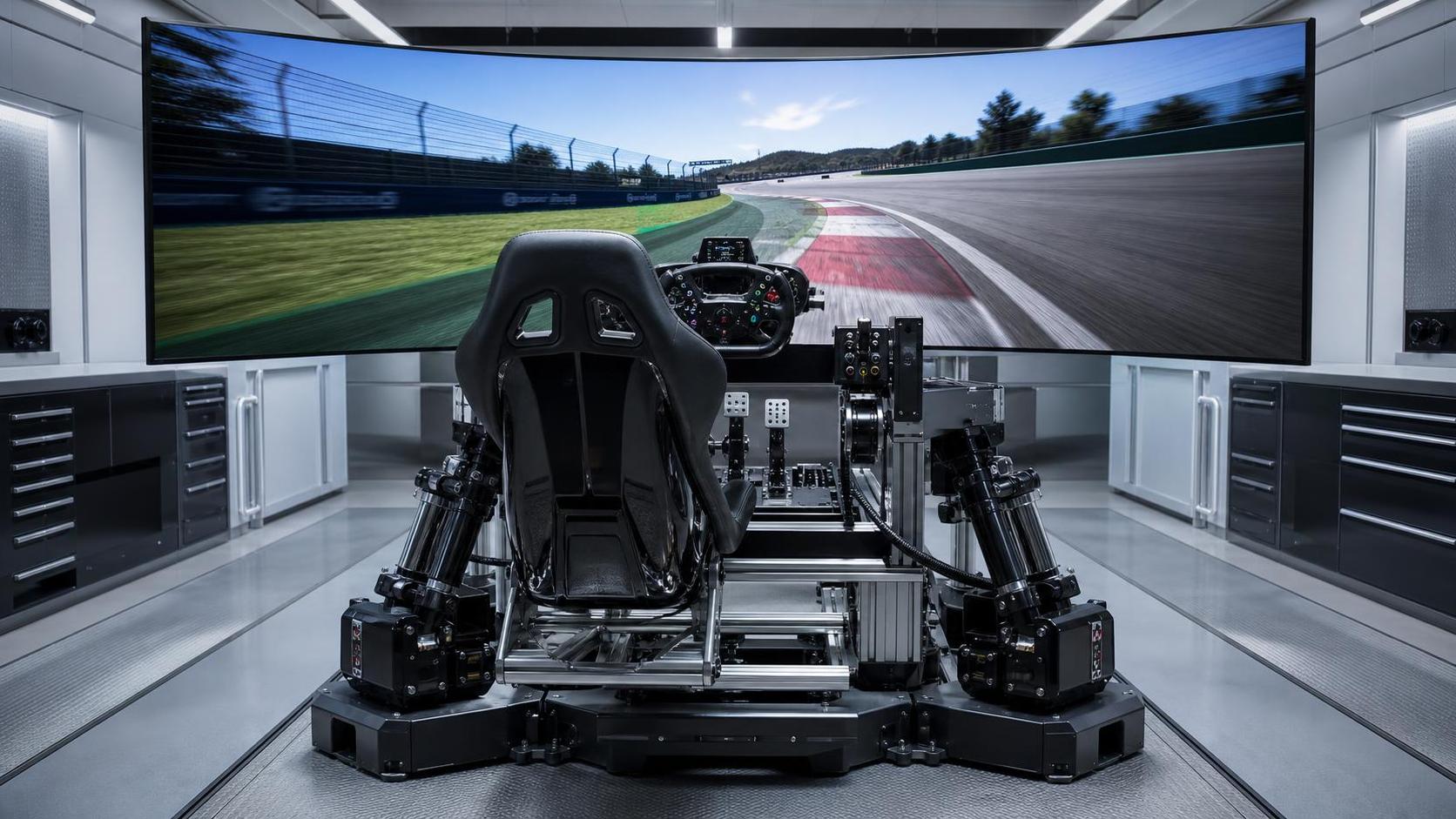
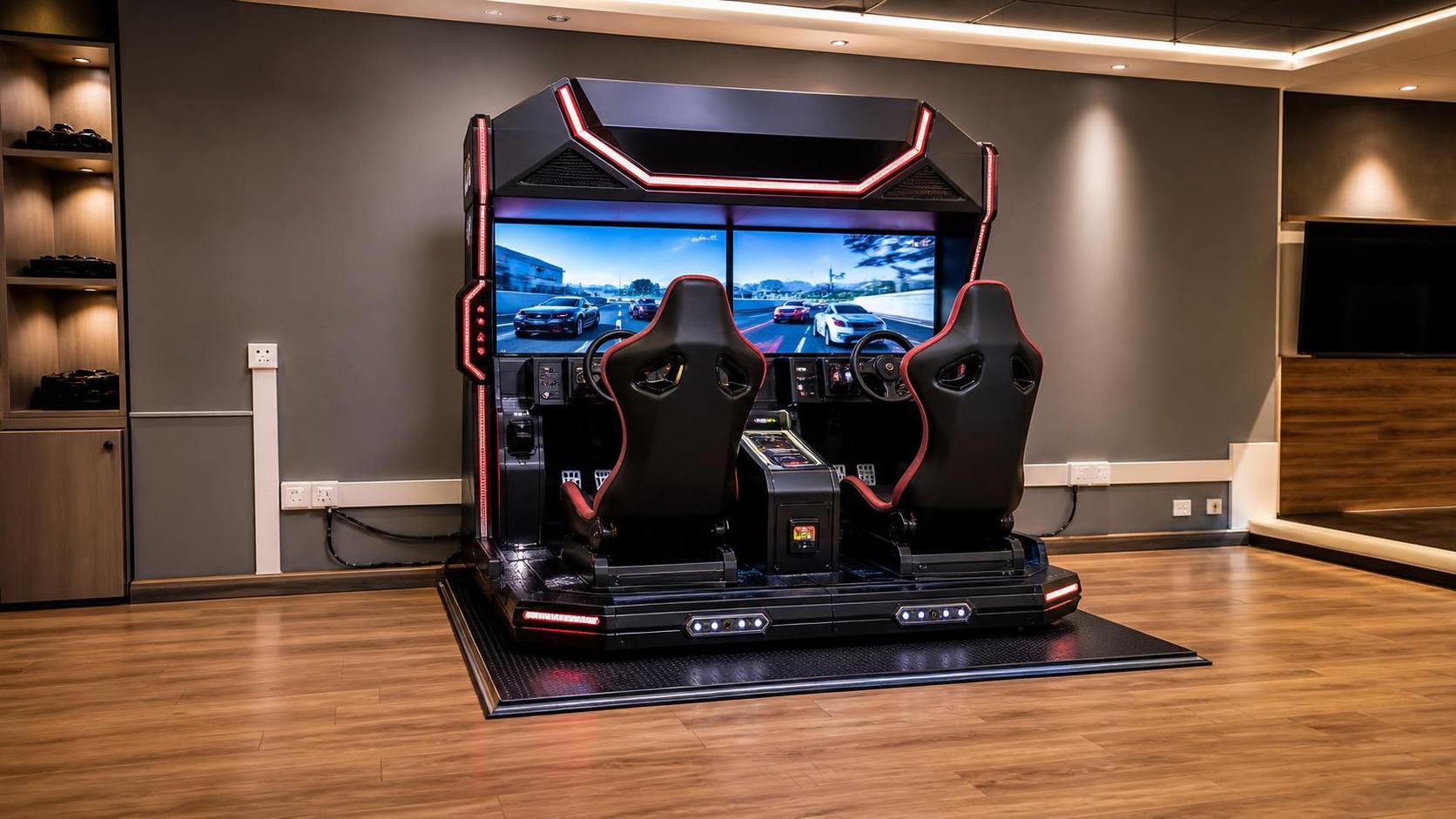
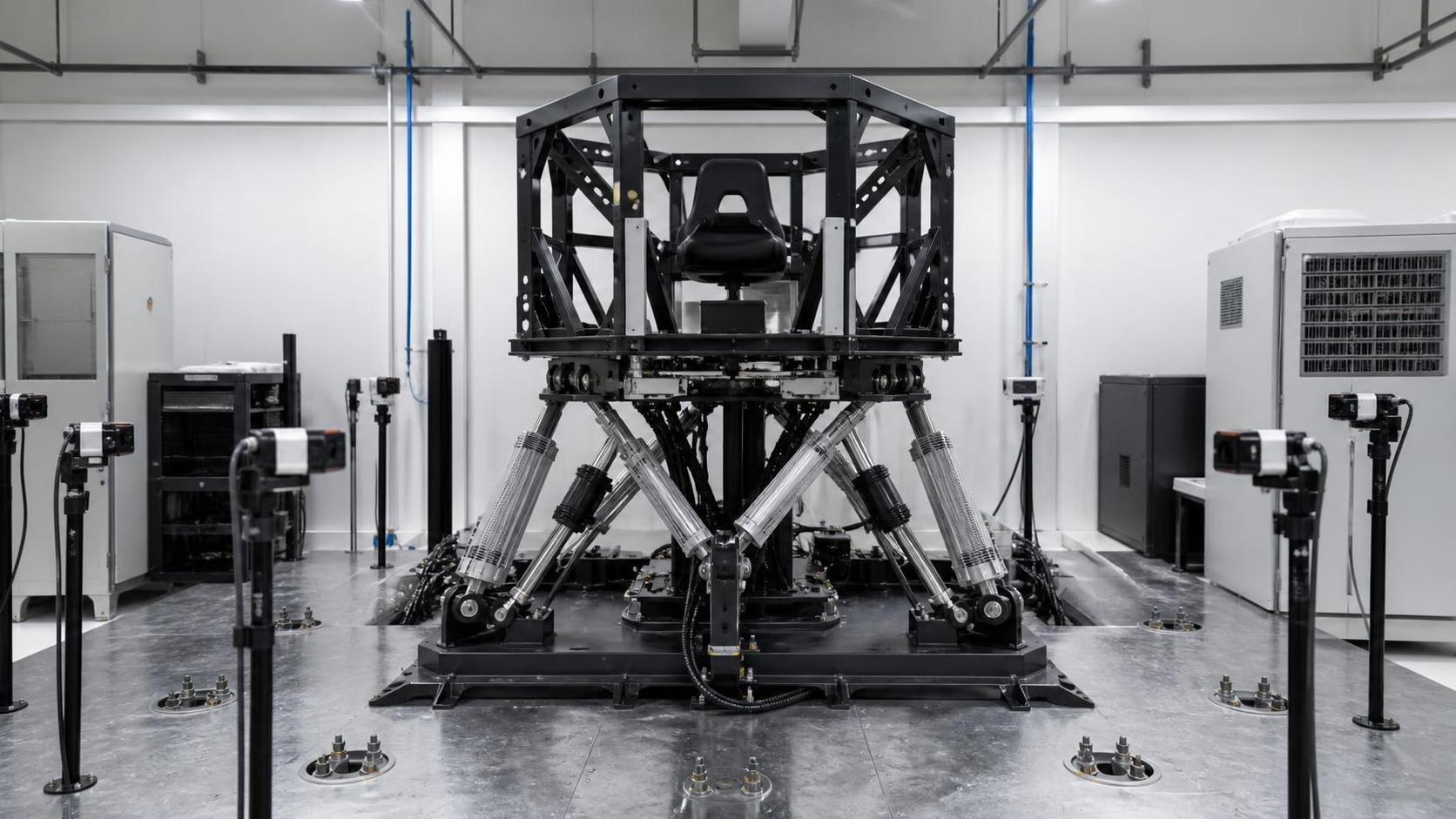
The direct impact identified in the source material falls on equipment with relatively dense product categorization and clearance requirements, including IoT claw machines, VR free-roam systems, and 6-DOF simulators, where customs cost and pricing structures are likely to be affected first.
Where the pressure is likely to appear first
Quoted prices may need faster revision
From an industry perspective, direct trading companies are likely to feel the change quickly because customs cost can no longer be treated the same way for parcels that previously fell under the low-value threshold. The practical impact is most visible in quotation logic, landed-cost calculations, and margin control for shipments involving multiple HS code lines.
Distribution and channel operations face a pricing mismatch risk
For channel operators and distributors handling imported entertainment equipment, the key issue is whether existing price lists, customer offers, and contract assumptions still reflect actual import cost. What deserves closer attention is the gap that can emerge between pre-policy commercial terms and post-policy customs treatment, especially for products with more complex classification structures.
Supply chain service providers will need tighter documentation handling
Customs brokers, logistics coordinators, and related service providers may be affected through the execution side of clearance. The main pressure point is not only the duty itself, but also the handling of HS code lines, supporting documents, and VAT-related processing where IOSS registration status changes the tax exposure.
Buyers of high-category-density systems may see procurement assumptions change
For buyers and project-side purchasers of VR free-roam systems, 6-DOF simulators, and similar equipment, the impact may appear in procurement budgeting, delivery planning, and supplier discussions. Analysis shows that the more category-dense the equipment is, the more important it becomes to understand how customs treatment feeds into the final quoted price.
What companies should watch now
Check whether HS code line structure affects total landed cost
Companies dealing in entertainment equipment should pay close attention to how products are declared by HS code line, because the provided information indicates that the fixed duty is charged per line. In practice, this makes classification structure a direct commercial issue rather than only a customs formality.
Review IOSS registration status and VAT exposure
The information provided specifically notes a broader VAT tax base risk for importers that are not registered under IOSS. That makes tax setup, importer status, and related documentation a near-term point of review for businesses shipping into the EU.
Revisit quotation, contract, and customer communication timing
Observably, one of the most immediate operational tasks is aligning quotations and customer communication with the new rule. Businesses should distinguish between policy language and how it translates into actual shipment pricing, especially where delivery schedules cross the July 1, 2026 implementation date.
Monitor the transition period through June 2028
The transition period itself is an important practical detail. What deserves closer attention is whether official implementation language, customs execution, and commercial practice remain fully aligned through June 2028, since this will shape how companies prepare medium-term import and pricing strategies.
Why this matters beyond a single tariff adjustment
Analysis shows that this development is more than a narrow customs update for low-value parcels. In the entertainment equipment segment, it signals that customs structure, tax registration status, and product classification are becoming more tightly linked to day-to-day commercial decisions.
At the same time, it is more appropriate to understand this as a confirmed policy change with ongoing operational implications, rather than as a completed market outcome. The rule itself is clear from the provided information, but its full business effect will depend on how importers, service providers, and buyers adjust their documentation, pricing, and execution processes.
How to read the signal at this stage
At this stage, the most balanced reading is that the EU's removal of the under-€150 duty relief creates a direct cost and compliance issue for imported entertainment equipment, especially where multiple HS code lines and VAT handling already make clearance more complex. For the industry, this is best understood as an immediate operational change and a longer-term compliance signal, not as a basis for broad conclusions beyond the facts currently available.
Basis of this article
This article is generated from the user-provided news title, event date, and event summary. The information available for this piece is limited to the stated policy change, implementation date, transition period, VAT-related risk for non-IOSS importers, and the named equipment categories directly affected.
For this type of development, source types typically worth checking include official notices, company announcements, industry association updates, authoritative media coverage, and standard or regulatory documents. A specific official source link was not provided in the input, so further verification remains necessary. Ongoing attention should focus on any additional official clarification related to customs execution, VAT treatment, and practical application during the transition period through June 2028.
Related News
 FEC Capital & Yield per Sq.FtHow to Assess Premium FEC Equipment for High-Throughput Venues in Saudi ArabiaPremium FEC equipment Saudi Arabia: assess throughput, integration, safety, and supplier support to build profitable, high-performing entertainment venues.
 FEC Capital & Yield per Sq.FtHow to Select Entertainment Venue Planning Software for Multi-Attraction ProjectsEntertainment venue planning software selection guide for multi-attraction projects—compare equipment data, guest flow, compliance, utilities, and ROI tools.
 Precision Slate Billiard TablesHow Networked Billiards Help Pubs Increase Repeat Play and Venue RevenueNetworked billiards for pubs turn casual games into repeat visits, longer stays, and stronger food-and-drink revenue. Discover practical strategies for bookings, leagues, and data-led growth.
 FEC Capital & Yield per Sq.FtWhat Defines a Successful Digital Entertainment Hub in the U.S. Market?Digital entertainment hubs USA succeed through smart attraction mixes, cashless systems, reliable operations, and repeat-visit design. Explore the strategies driving profitable venues.
 FEC Capital & Yield per Sq.FtHow to Use an Arcade Performance Optimization Dashboard to Improve FEC RevenueDiscover how an arcade performance optimization dashboard helps FECs increase revenue, reduce downtime, protect margins, and optimize floor performance.
 FEC Capital & Yield per Sq.FtHow to Calculate VR Amusement Venue ROI Before Investing in a Free-Roam AttractionVR amusement venue ROI: learn how to model capital costs, sellable sessions, operating expenses, break-even points, and payback before investing in a free-roam attraction.
 Precision Slate Billiard TablesHow Camera Scoring for Billiards Improves Match Accuracy and Player ExperienceCamera scoring for billiards improves match accuracy, reduces disputes, and creates a smoother player experience. Explore smarter scoring, integration, and venue-ready setup insights.
 Direct Drive Wheels & PedalsHow Dynamic Force Feedback Steering Improves Realism in Racing SimulatorsDynamic force feedback steering makes racing simulators more realistic with responsive torque, grip cues, low-latency control, and safer, immersive driving feedback.
 Multiplayer VR Free-RoamHow to Select a High-Immersion Motion Platform for Location-Based VR AttractionsHigh-immersion motion platforms: learn how to match motion quality, VR content, safety, throughput, and maintenance for profitable location-based VR attractions.
 Multiplayer VR Free-RoamHow Malls Can Evaluate VR Free-Roam Arenas for Footfall, Dwell Time, and ROIVR free-roam arenas for malls: learn how to assess footfall, dwell time, throughput, operating costs, and ROI for a profitable leisure investment.
 Interactive Prize VendingHow to Select Smart Prize Systems for Higher FEC Redemption RevenueSmart prize systems help FECs increase redemption revenue, streamline inventory, reduce queues, and create better guest experiences. Discover key selection strategies.
 FEC Capital & Yield per Sq.FtHow to Select Family Entertainment Center Equipment for Your Floor Plan and Revenue MixFamily entertainment center equipment selection made smarter: align floor plans, guest flow, capacity, utilities, and revenue mix to create a profitable, flexible venue.
 Direct Drive Wheels & PedalsWhat Determines Direct Drive Motor Prices for Arcade Racing Simulators?Direct Drive motors price depends on torque, encoders, controllers, durability, and support. Learn how to compare arcade racing simulator systems for better value.
 CE/FCC & IoT Data SecurityCE Certification for Amusement Equipment: Tests, Documents, and EU Market AccessAmusement equipment certification Europe: discover CE tests, technical documents, safety standards, and practical steps for confident EU market access.
 Interactive Wall Projection SportsInteractive Sports Entertainment Systems: Key Selection Criteria for FECsInteractive sports entertainment systems: discover key FEC selection criteria for player flow, revenue, maintenance, integration, safety, and guest appeal.
 CE/FCC & IoT Data SecurityEntertainment Technology Export: CE, FCC, and IoT Compliance for Global SalesEntertainment technology export made simpler: learn how CE, FCC, and IoT compliance support safer global sales, connected systems, and market-ready deployment.
 FEC Capital & Yield per Sq.FtHow Arcade Data Analytics Software Improves FEC Revenue per Square FootArcade data analytics software helps FECs increase revenue per square foot by reducing downtime, optimizing game mix, pricing, payouts, and floor-space performance.
 FEC Capital & Yield per Sq.FtWhat Is a Healthy Arcade Venue Revenue per Square Foot? Benchmarks and DriversVenue Revenue Per Square Foot arcade benchmarks explained: compare productive space, costs, machine yield, and key drivers to build a healthier, more profitable venue.
 Multiplayer VR Free-RoamMultiplayer Headset Integration Technology: Syncing Audio, Tracking, and SessionsHeadset Integration Technology multiplayer solutions synchronize audio, tracking, and sessions to improve VR venue safety, uptime, and player experiences.
 FEC Capital & Yield per Sq.FtHow to Evaluate a Networked Arcade Machine for Multi-Location FEC OperationsNetworked arcade machine evaluation guide for multi-location FECs: assess connectivity, cashless integration, remote controls, uptime, and scalable deployment.
 String Pinsetter BowlingHow to Evaluate a Bowling System Technology Supplier for FEC ProjectsBowling system technology supplier guide for FEC projects: evaluate integration, scoring, service support, compliance, and total operating cost.
 FEC Capital & Yield per Sq.FtHow Arcade Data Analytics Helps FEC Operators Improve Revenue per Square FootArcade data analytics helps FEC operators raise revenue per square foot by optimizing machine mix, pricing, uptime, payouts, and guest flow.
 6-DOF Racing SimulatorsHow Telemetry Systems Improve Driver Feedback in Immersive Racing SimulatorsImmersive racing systems telemetry transforms live vehicle data into precise steering, pedal, motion, and haptic feedback—helping operators deliver realistic, reliable, and engaging driver experiences.
 CE/FCC & IoT Data SecurityBuying Arcade Machines in Germany: CE Compliance, VAT, and Venue FitArcade machine Germany buying guide: understand CE compliance, VAT, landed costs, payment systems, venue fit, and service planning before you invest.
 Flight & Mech SimulatorsDigital Simulation Systems: Validating Performance Before Physical PrototypingDigital simulation technology systems help validate performance, safety, controls, and user experience before physical prototyping—reducing risks, rework, and costs.
 FEC Capital & Yield per Sq.FtArcade Profit Optimization Strategy: How FEC Owners Improve Yield per Sq.FtArcade profit optimization strategy for FEC owners: learn how to boost yield per sq.ft through smarter layout, payout control, uptime analysis, and better equipment mix.
 FEC Capital & Yield per Sq.FtArcade Equipment Supplier Trends: What FEC Buyers Should Watch in 2025Arcade equipment innovation supplier trends in 2025 reveal what FEC buyers must watch: connected systems, software stability, mechanical reliability, and smarter supplier selection.
 Multiplayer VR Free-RoamHow Real Time Motion Capture Technology Improves Immersive VR AttractionsReal time motion capture technology helps VR attractions boost immersion, reduce latency issues, improve multiplayer interaction, and support smoother venue operations.
 Multiplayer VR Free-RoamHow to Choose Commercial VR Arena Software for Multiplayer Free-Roam VenuesCommercial VR arena software buyer guide: learn how to compare tracking, multiplayer stability, operator workflow, hardware fit, and support for profitable free-roam venues.
 Spatial Computing & 6-DOFHow Real Time Simulation Technology Improves Training Accuracy in VR AttractionsReal time simulation technology helps VR attractions improve training accuracy, reduce faults, and strengthen safety, uptime, and guest experience—see how smarter training boosts venue performance.


Related News
- 00
0000-00
How to Assess Premium FEC Equipment for High-Throughput Venues in Saudi Arabia - 00
0000-00
How to Select Entertainment Venue Planning Software for Multi-Attraction Projects - 00
0000-00
How Networked Billiards Help Pubs Increase Repeat Play and Venue Revenue - 00
0000-00
What Defines a Successful Digital Entertainment Hub in the U.S. Market? - 00
0000-00
How to Use an Arcade Performance Optimization Dashboard to Improve FEC Revenue
Amusement Terminal Architect
Strategic Intelligence Center