
China-Uzbekistan AEO Recognition Speeds Central Asia Exports
Author
Date Published
Reading Time
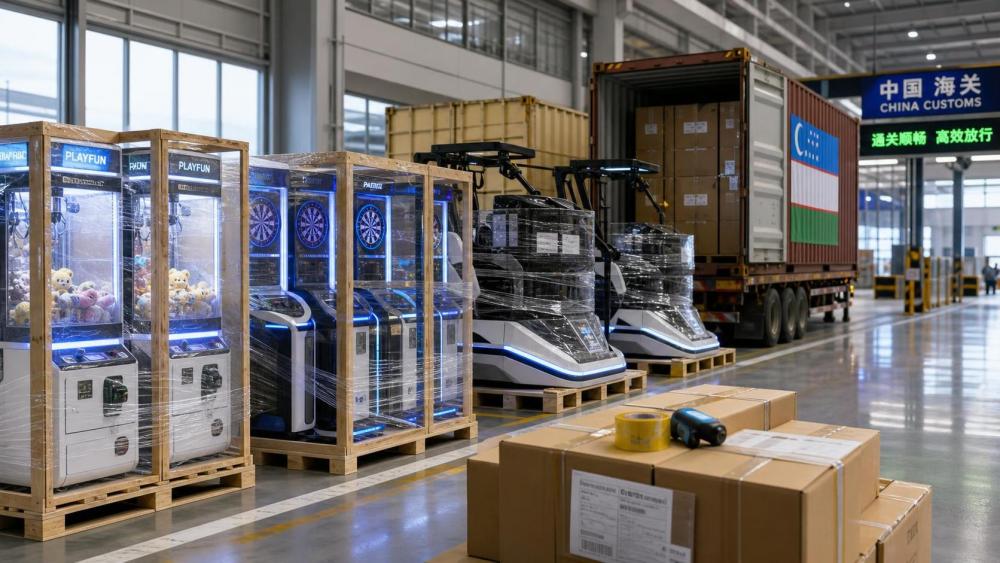
Effective August 1, 2026, mutual recognition of Authorized Economic Operator (AEO) status between China Customs and Uzbekistan Customs has come into force for exports covering the full range of commercial indoor amusement equipment. For companies shipping products such as IoT claw machines, connected darts systems, and VR free-roam equipment into Central Asia, the development is worth close attention because it points to faster border handling for qualified exporters and may directly affect delivery timing, channel coordination, and market expansion plans in Uzbekistan and the wider emerging FEC segment.
What Has Officially Taken Effect
According to the provided event information, the China-Uzbekistan AEO mutual recognition arrangement became effective on August 1, 2026. The scope applies to all commercial indoor entertainment equipment exports, including IoT claw machines, connected darts systems, and VR free-roam devices. Chinese manufacturers with AEO qualification can receive priority inspection treatment in Uzbekistan, lower inspection rates, access to a dedicated coordinator, and faster customs clearance. The expected result stated in the event summary is an average reduction of more than 40% in port dwell time.
Where the Impact May Be Felt First
Exporters shipping complete equipment
From an industry perspective, manufacturers and direct trading companies are the most immediate stakeholders because the arrangement is tied to AEO-qualified Chinese exporters. The likely impact is concentrated in customs handling, shipment release timing, and delivery predictability. What deserves closer attention is whether a supplier's qualification status becomes a more visible factor in customer discussions and order planning for Central Asia-bound shipments.
Channel partners building local market access
Distributors and channel partners targeting emerging FEC opportunities in Central Asia may also be affected because shorter border delays can improve coordination around installation windows, launch timing, and inventory turnover. Analysis shows that the practical value here is not only speed, but also the possibility of reducing uncertainty in cross-border handover and local project scheduling.
Supply chain and fulfillment service providers
Logistics coordinators, customs service providers, and related fulfillment partners may see process changes in documentation review, customs communication, and exception handling. Observably, the availability of priority inspection, lower inspection rates, and a dedicated coordinator suggests that execution quality around shipment preparation and customs-facing communication could become more important for companies serving this export flow.
Buyers and operators planning venue rollouts
For procurement teams and operators sourcing indoor amusement equipment, the main effect may appear in delivery expectations rather than product specification. If border dwell time is reduced as indicated, buyers may begin to reassess lead-time assumptions for imported equipment into Uzbekistan. The point to watch is whether faster clearance translates consistently into project-level scheduling confidence.
What Companies Should Watch in Practice
AEO qualification as a commercial variable
Companies exporting to Uzbekistan should pay attention to whether AEO status is becoming a practical gatekeeper for smoother execution rather than only a compliance label. For suppliers without the qualification, customer communication may need to address how delivery timing and customs handling will be managed under the new framework.
Documentation and customs-facing readiness
Because the stated benefits relate directly to inspection treatment and clearance speed, exporters and their service partners should closely review document completeness, shipment consistency, and internal coordination around customs procedures. Analysis shows that policy benefits and actual operational gains are not automatically the same thing; execution quality will still matter.
Category focus within indoor entertainment equipment
The inclusion of products such as IoT claw machines, connected darts systems, and VR free-roam equipment indicates that digitally connected and site-dependent amusement formats are clearly within scope. Companies active in these categories should watch whether customers begin to adjust delivery conversations, installation sequencing, or channel commitments based on faster customs expectations.
Follow-up language from official and market channels
What deserves closer attention is how the arrangement is described in subsequent official notices, transaction documents, and partner communications. Businesses should distinguish between the confirmed policy mechanism and the pace at which its benefits become visible in daily shipment operations.
Why This Looks Like More Than a Routine Customs Update
Observably, this development matters because it links customs treatment directly with the export competitiveness of indoor amusement equipment in a market expansion context. Analysis shows that the immediate signal is operational rather than promotional: companies with the right qualification may gain an advantage in shipment efficiency, while channel partners may view border reliability as part of supplier selection. At the same time, it is more appropriate to understand this as a concrete facilitation measure with early-stage business implications, not as proof of guaranteed market outcomes.
How This News Is Best Understood Now
At this stage, the China-Uzbekistan AEO mutual recognition arrangement is best read as a meaningful trade facilitation signal for exporters of commercial indoor entertainment equipment heading into Central Asia. The confirmed facts point to faster customs treatment for AEO-qualified Chinese manufacturers and a stated reduction of more than 40% in average port dwell time. From an industry perspective, the real significance will depend on how consistently those benefits translate into planning, fulfillment, and channel execution across actual shipments.
Basis of This Article and Ongoing Verification
This article is based on the user-provided news title, event date, and event summary. For this type of industry update, relevant source categories would typically include official customs announcements, company disclosures, trade association updates, authoritative media reporting, and related policy or standards documents. A specific official source link was not provided in the input, so the exact source documentation still requires ongoing verification. Areas that remain worth tracking include any further official wording, implementation details in practice, and how quickly the stated customs benefits appear in real export operations.
Related News
 Multiplayer VR Free-RoamHow to Evaluate VR Gaming Technology for High-Throughput Location-Based VenuesVR gaming technology evaluation guide for high-throughput venues—optimize player flow, reliability, safety, maintenance, and ROI.
 6-DOF Racing SimulatorsHow to Synchronize Motion Simulator Telemetry for Consistent Vehicle ResponseMotion simulator telemetry synchronization: learn how to align vehicle data, visuals, haptics, and platform motion for safer, smoother, and more consistent driving response.
 FEC Capital & Yield per Sq.FtWhat Does High-Tech Amusement Equipment Cost When Budgeting a New FEC?High-tech amusement equipment cost explained for new FECs—plan smarter for purchase, installation, software, maintenance, and profitable attraction mix.
 FEC Capital & Yield per Sq.FtWhat Equipment Mix Works Best for a Family Entertainment Center?What equipment mix works for a family entertainment center? Discover how to balance arcade games, redemption, social play, and anchor attractions for stronger revenue.
 Multiplayer VR Free-RoamHow Can VR Venues Reduce Motion Sickness for Players?How can VR venues reduce motion sickness? Discover practical strategies for smoother, safer VR sessions that improve guest comfort, reviews, repeat visits, and revenue.
 FEC Capital & Yield per Sq.FtHow to Assess Premium FEC Equipment for High-Throughput Venues in Saudi ArabiaPremium FEC equipment Saudi Arabia: assess throughput, integration, safety, and supplier support to build profitable, high-performing entertainment venues.
 FEC Capital & Yield per Sq.FtHow to Select Entertainment Venue Planning Software for Multi-Attraction ProjectsEntertainment venue planning software selection guide for multi-attraction projects—compare equipment data, guest flow, compliance, utilities, and ROI tools.
 Precision Slate Billiard TablesHow Networked Billiards Help Pubs Increase Repeat Play and Venue RevenueNetworked billiards for pubs turn casual games into repeat visits, longer stays, and stronger food-and-drink revenue. Discover practical strategies for bookings, leagues, and data-led growth.
 FEC Capital & Yield per Sq.FtWhat Defines a Successful Digital Entertainment Hub in the U.S. Market?Digital entertainment hubs USA succeed through smart attraction mixes, cashless systems, reliable operations, and repeat-visit design. Explore the strategies driving profitable venues.
 FEC Capital & Yield per Sq.FtHow to Use an Arcade Performance Optimization Dashboard to Improve FEC RevenueDiscover how an arcade performance optimization dashboard helps FECs increase revenue, reduce downtime, protect margins, and optimize floor performance.
 FEC Capital & Yield per Sq.FtHow to Calculate VR Amusement Venue ROI Before Investing in a Free-Roam AttractionVR amusement venue ROI: learn how to model capital costs, sellable sessions, operating expenses, break-even points, and payback before investing in a free-roam attraction.
 Precision Slate Billiard TablesHow Camera Scoring for Billiards Improves Match Accuracy and Player ExperienceCamera scoring for billiards improves match accuracy, reduces disputes, and creates a smoother player experience. Explore smarter scoring, integration, and venue-ready setup insights.
 Direct Drive Wheels & PedalsHow Dynamic Force Feedback Steering Improves Realism in Racing SimulatorsDynamic force feedback steering makes racing simulators more realistic with responsive torque, grip cues, low-latency control, and safer, immersive driving feedback.
 Multiplayer VR Free-RoamHow to Select a High-Immersion Motion Platform for Location-Based VR AttractionsHigh-immersion motion platforms: learn how to match motion quality, VR content, safety, throughput, and maintenance for profitable location-based VR attractions.
 Multiplayer VR Free-RoamHow Malls Can Evaluate VR Free-Roam Arenas for Footfall, Dwell Time, and ROIVR free-roam arenas for malls: learn how to assess footfall, dwell time, throughput, operating costs, and ROI for a profitable leisure investment.
 Interactive Prize VendingHow to Select Smart Prize Systems for Higher FEC Redemption RevenueSmart prize systems help FECs increase redemption revenue, streamline inventory, reduce queues, and create better guest experiences. Discover key selection strategies.
 FEC Capital & Yield per Sq.FtHow to Select Family Entertainment Center Equipment for Your Floor Plan and Revenue MixFamily entertainment center equipment selection made smarter: align floor plans, guest flow, capacity, utilities, and revenue mix to create a profitable, flexible venue.
 Direct Drive Wheels & PedalsWhat Determines Direct Drive Motor Prices for Arcade Racing Simulators?Direct Drive motors price depends on torque, encoders, controllers, durability, and support. Learn how to compare arcade racing simulator systems for better value.
 CE/FCC & IoT Data SecurityCE Certification for Amusement Equipment: Tests, Documents, and EU Market AccessAmusement equipment certification Europe: discover CE tests, technical documents, safety standards, and practical steps for confident EU market access.
 Interactive Wall Projection SportsInteractive Sports Entertainment Systems: Key Selection Criteria for FECsInteractive sports entertainment systems: discover key FEC selection criteria for player flow, revenue, maintenance, integration, safety, and guest appeal.
 CE/FCC & IoT Data SecurityEntertainment Technology Export: CE, FCC, and IoT Compliance for Global SalesEntertainment technology export made simpler: learn how CE, FCC, and IoT compliance support safer global sales, connected systems, and market-ready deployment.
 FEC Capital & Yield per Sq.FtHow Arcade Data Analytics Software Improves FEC Revenue per Square FootArcade data analytics software helps FECs increase revenue per square foot by reducing downtime, optimizing game mix, pricing, payouts, and floor-space performance.
 FEC Capital & Yield per Sq.FtWhat Is a Healthy Arcade Venue Revenue per Square Foot? Benchmarks and DriversVenue Revenue Per Square Foot arcade benchmarks explained: compare productive space, costs, machine yield, and key drivers to build a healthier, more profitable venue.
 Multiplayer VR Free-RoamMultiplayer Headset Integration Technology: Syncing Audio, Tracking, and SessionsHeadset Integration Technology multiplayer solutions synchronize audio, tracking, and sessions to improve VR venue safety, uptime, and player experiences.
 FEC Capital & Yield per Sq.FtHow to Evaluate a Networked Arcade Machine for Multi-Location FEC OperationsNetworked arcade machine evaluation guide for multi-location FECs: assess connectivity, cashless integration, remote controls, uptime, and scalable deployment.
 String Pinsetter BowlingHow to Evaluate a Bowling System Technology Supplier for FEC ProjectsBowling system technology supplier guide for FEC projects: evaluate integration, scoring, service support, compliance, and total operating cost.
 FEC Capital & Yield per Sq.FtHow Arcade Data Analytics Helps FEC Operators Improve Revenue per Square FootArcade data analytics helps FEC operators raise revenue per square foot by optimizing machine mix, pricing, uptime, payouts, and guest flow.
 6-DOF Racing SimulatorsHow Telemetry Systems Improve Driver Feedback in Immersive Racing SimulatorsImmersive racing systems telemetry transforms live vehicle data into precise steering, pedal, motion, and haptic feedback—helping operators deliver realistic, reliable, and engaging driver experiences.
 CE/FCC & IoT Data SecurityBuying Arcade Machines in Germany: CE Compliance, VAT, and Venue FitArcade machine Germany buying guide: understand CE compliance, VAT, landed costs, payment systems, venue fit, and service planning before you invest.
 Flight & Mech SimulatorsDigital Simulation Systems: Validating Performance Before Physical PrototypingDigital simulation technology systems help validate performance, safety, controls, and user experience before physical prototyping—reducing risks, rework, and costs.

Related News
- 00
0000-00
How to Evaluate VR Gaming Technology for High-Throughput Location-Based Venues - 00
0000-00
How to Synchronize Motion Simulator Telemetry for Consistent Vehicle Response - 00
0000-00
What Does High-Tech Amusement Equipment Cost When Budgeting a New FEC? - 00
0000-00
What Equipment Mix Works Best for a Family Entertainment Center? - 00
0000-00
How Can VR Venues Reduce Motion Sickness for Players?
Amusement Terminal Architect
Strategic Intelligence Center