
VR Commercial Applications That Improve Venue Throughput
Author
Date Published
Reading Time
For business evaluators assessing the next wave of high-yield entertainment assets, VR commercial applications are no longer experimental attractions—they are measurable traffic engines.
From free-roam arenas to motion simulators, modern VR systems improve throughput, dwell-time monetization, and operational efficiency in commercial indoor venues.
VR Commercial Applications That Improve Venue Throughput
VR commercial applications describe revenue-focused immersive systems installed in FECs, malls, arcades, sports bars, museums, and mixed-use entertainment hubs.
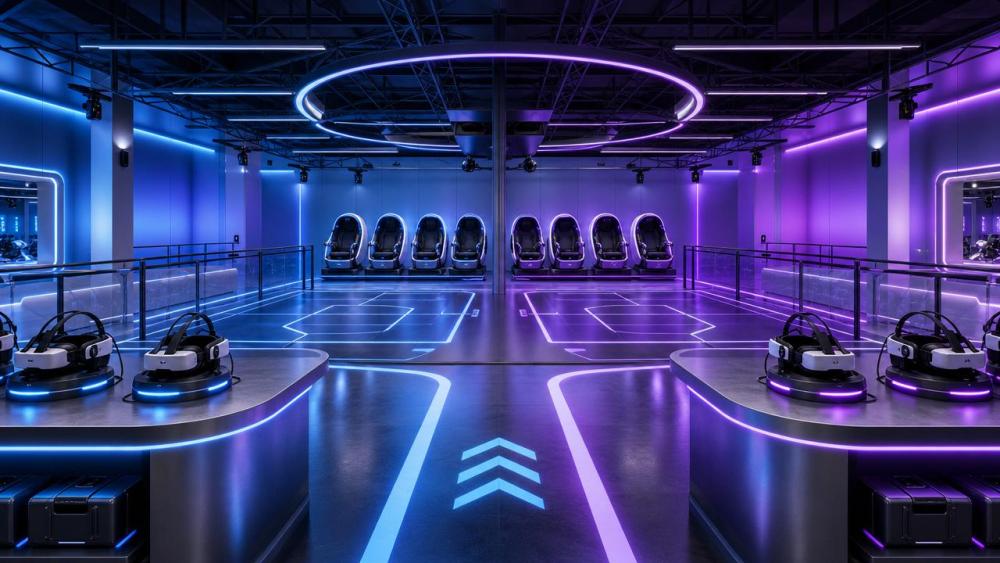
Unlike consumer VR, commercial systems are engineered for high usage, fast onboarding, predictable resets, and durable service under daily traffic pressure.
Their value is not only visual immersion. The stronger value is converting limited floor area into repeatable, premium, high-frequency play sessions.
CIAS views VR commercial applications through a venue-performance lens: capacity, cycle time, staff load, equipment uptime, and yield per square foot.
Commercial VR as a Throughput System
Throughput means how many paid experiences a venue can safely process within a fixed time, footprint, and staffing model.
Effective VR commercial applications reduce friction before, during, and after gameplay. The result is shorter idle time between sessions.
A free-roam arena may look like an open space. Operationally, it is a queue engine, briefing station, tracking grid, and replayable attraction.
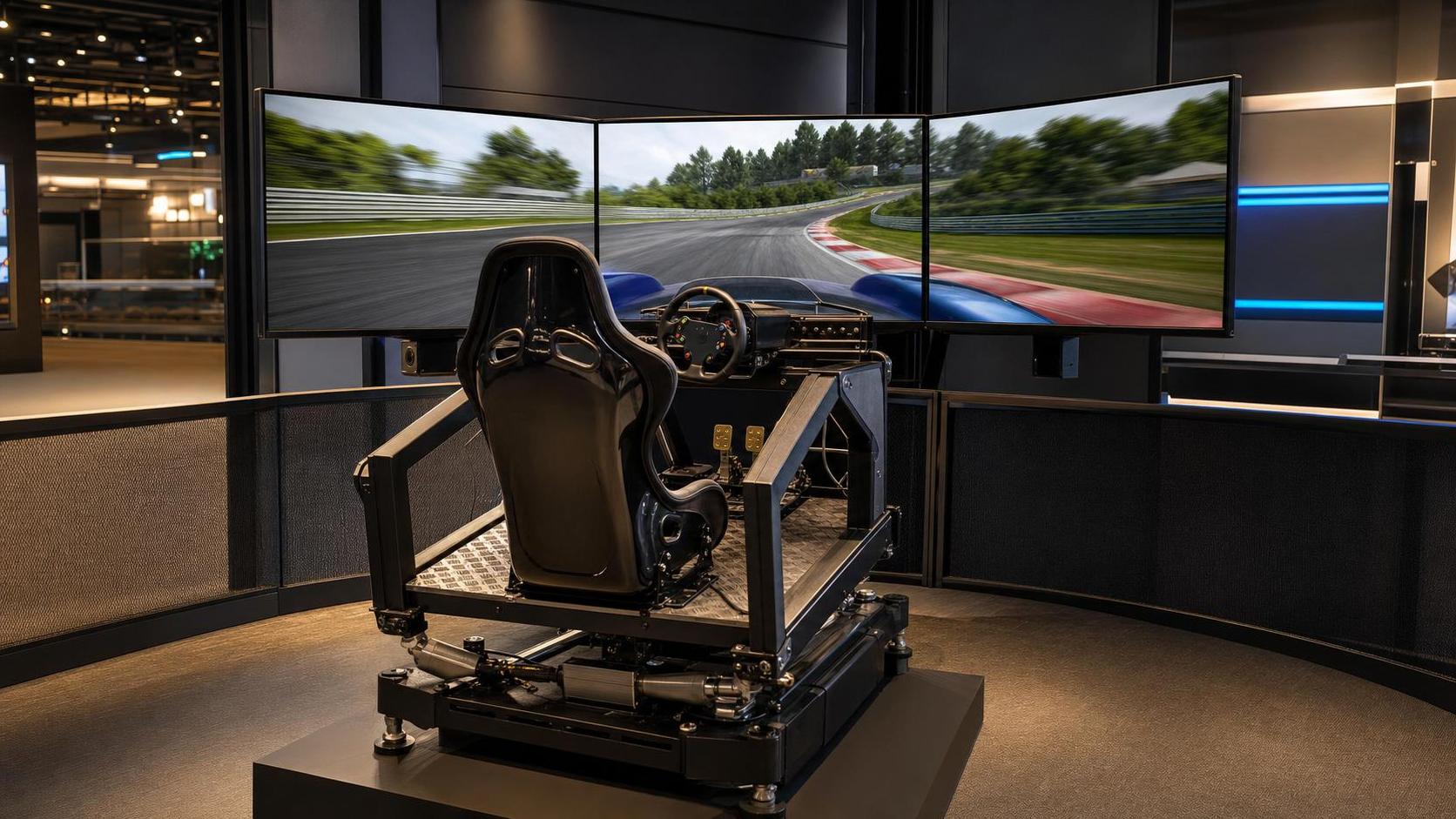
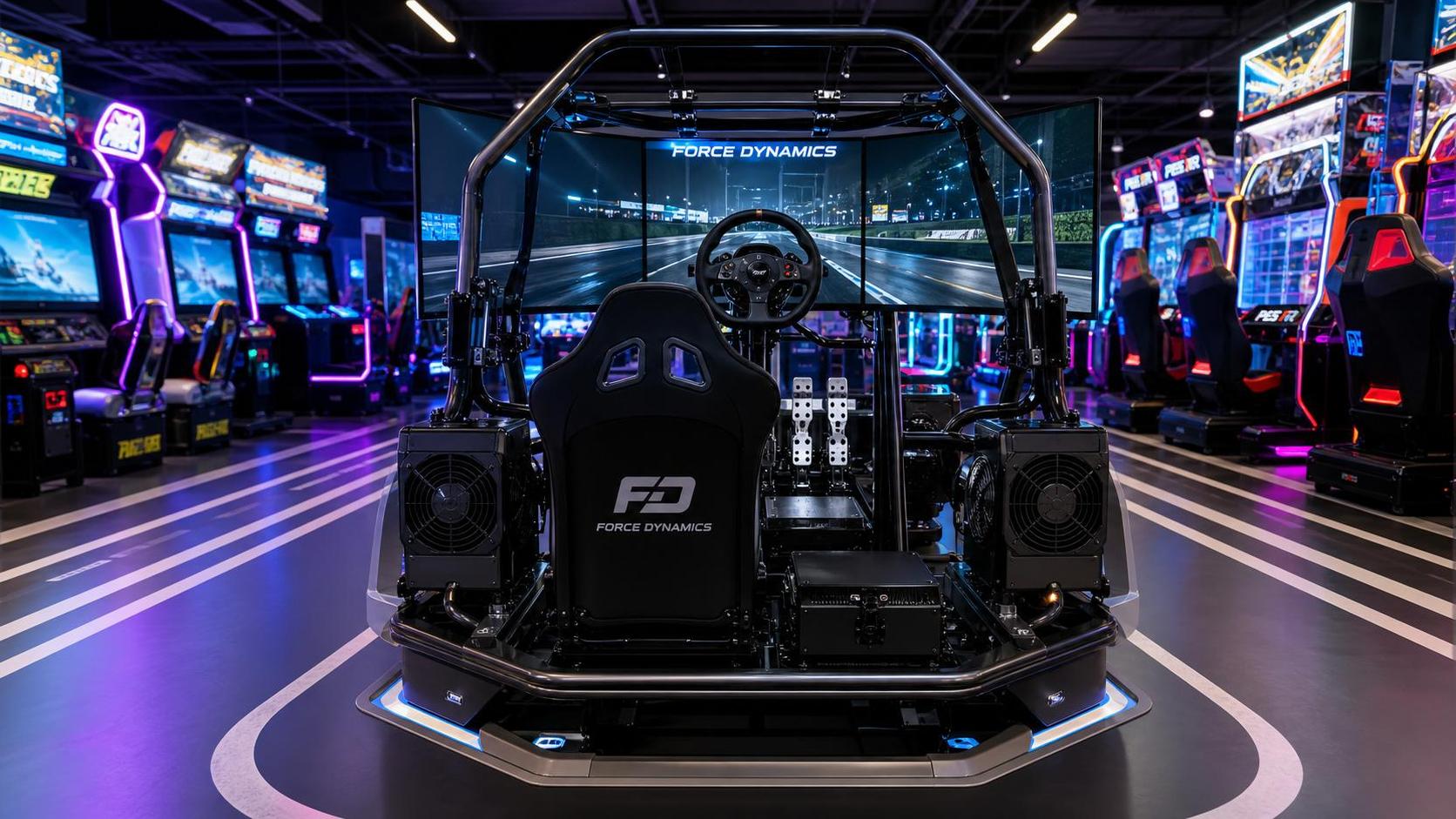
A motion simulator may look like a racing cockpit. Commercially, it is a premium-seat asset with clear session timing and strong upsell potential.
- Fast registration reduces lobby congestion.
- Clear session length improves scheduling.
- Reliable tracking reduces game interruptions.
- Automated content launch lowers staff dependency.
- Group formats raise revenue per booking.
The strongest VR commercial applications are therefore designed around both immersion and operational tempo.
Industry Signals Driving Adoption
Retail destinations are restructuring around experience-led visits. Entertainment anchors now need assets that create traffic, not just occupy space.
VR commercial applications answer this demand because they combine novelty, shareability, measurable session control, and premium ticket positioning.
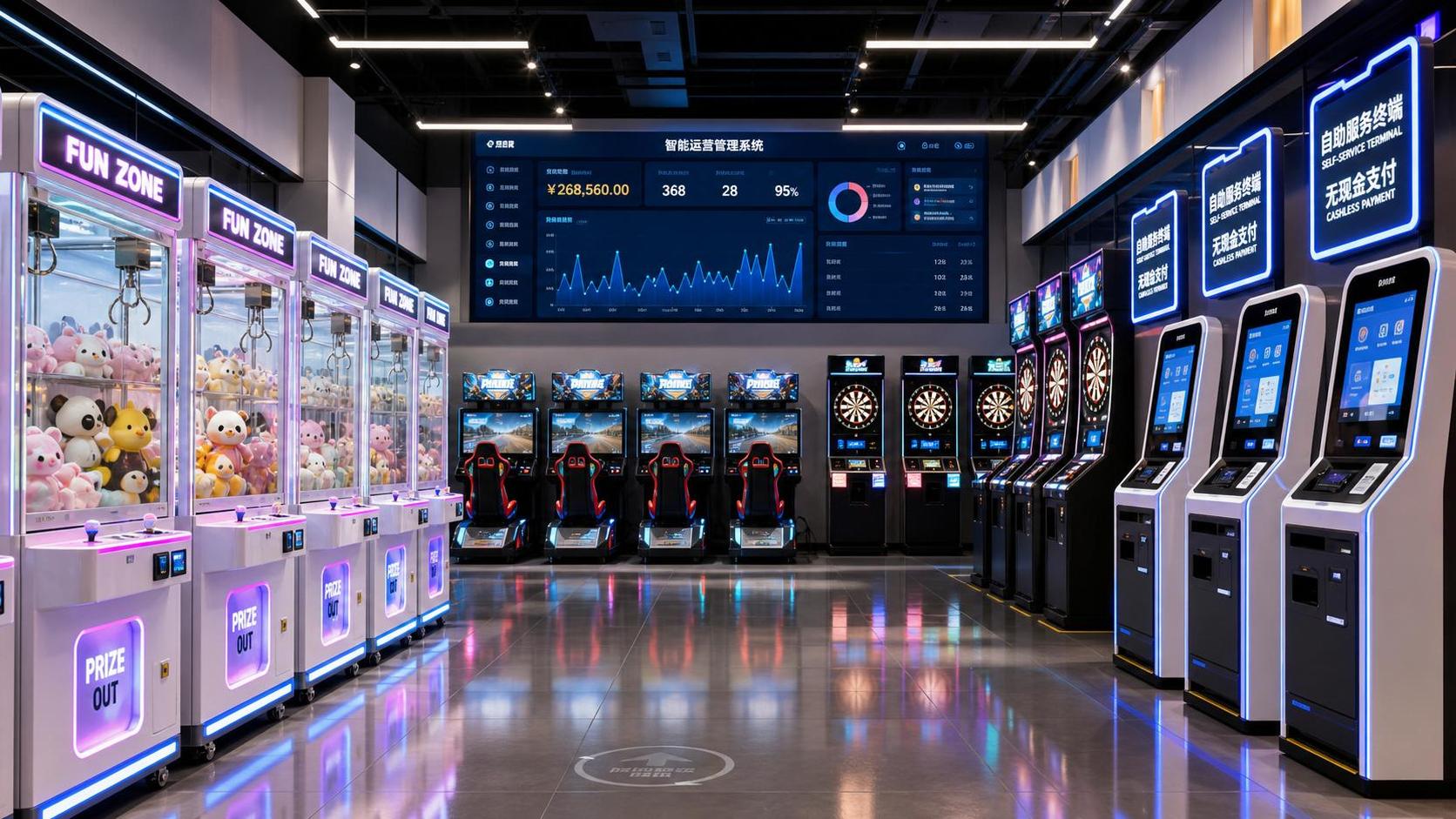
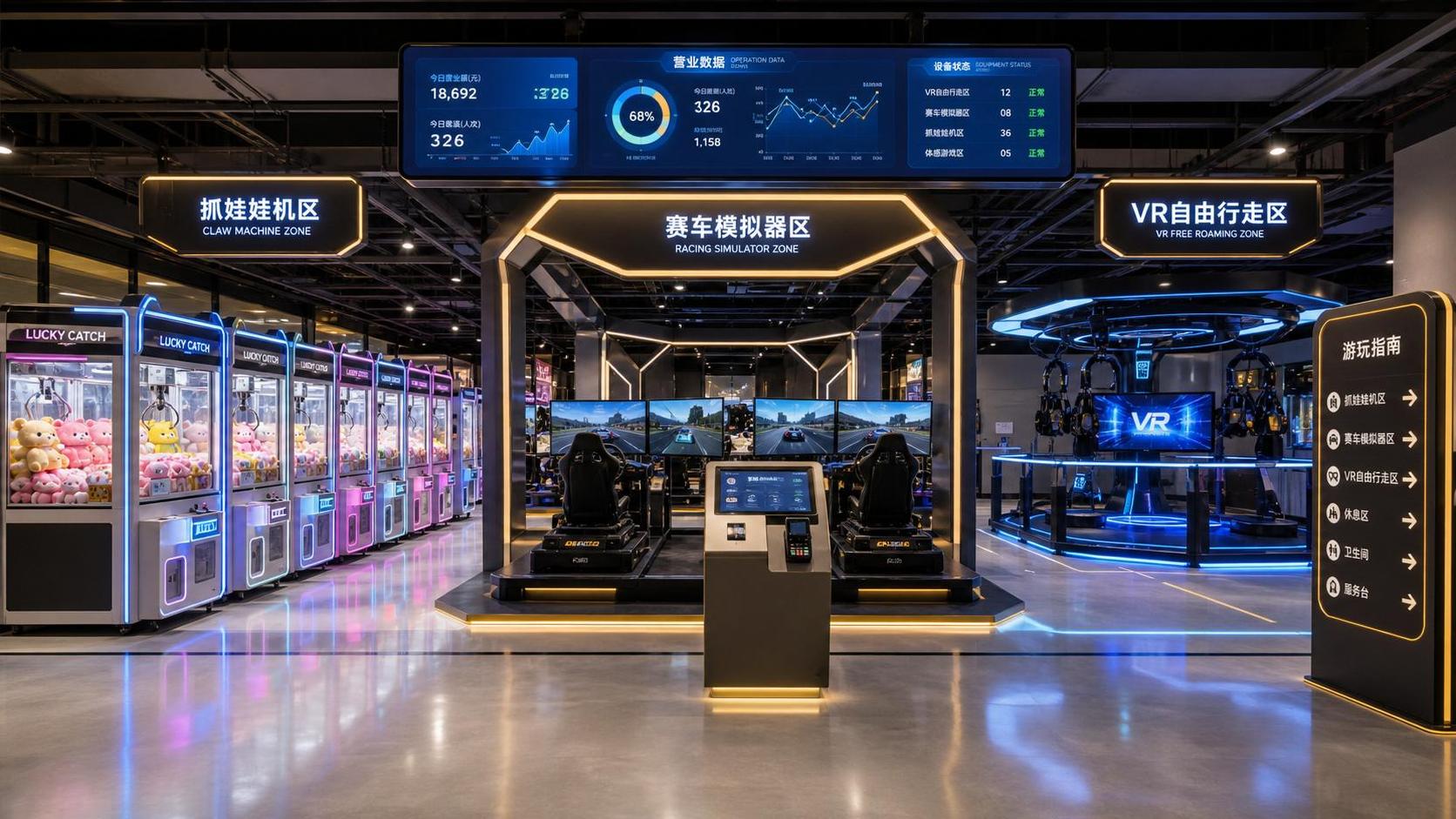
These signals explain why VR commercial applications increasingly sit beside prize machines, racing simulators, bowling, darts, and digital sports.
The commercial question is no longer whether guests accept VR. The question is whether the system improves venue flow.
Key Application Categories in Indoor Venues
Free-Roam VR Arenas
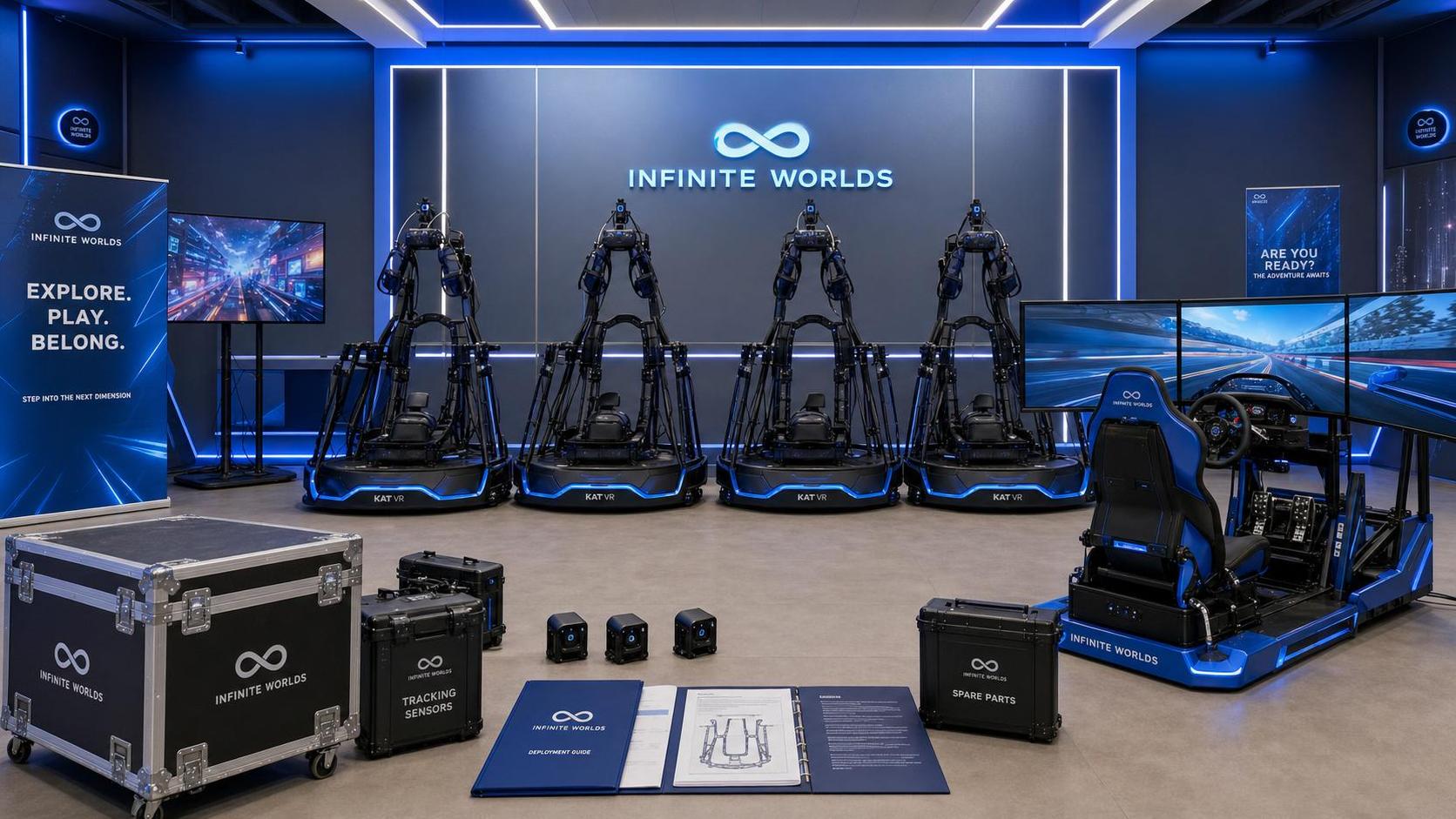
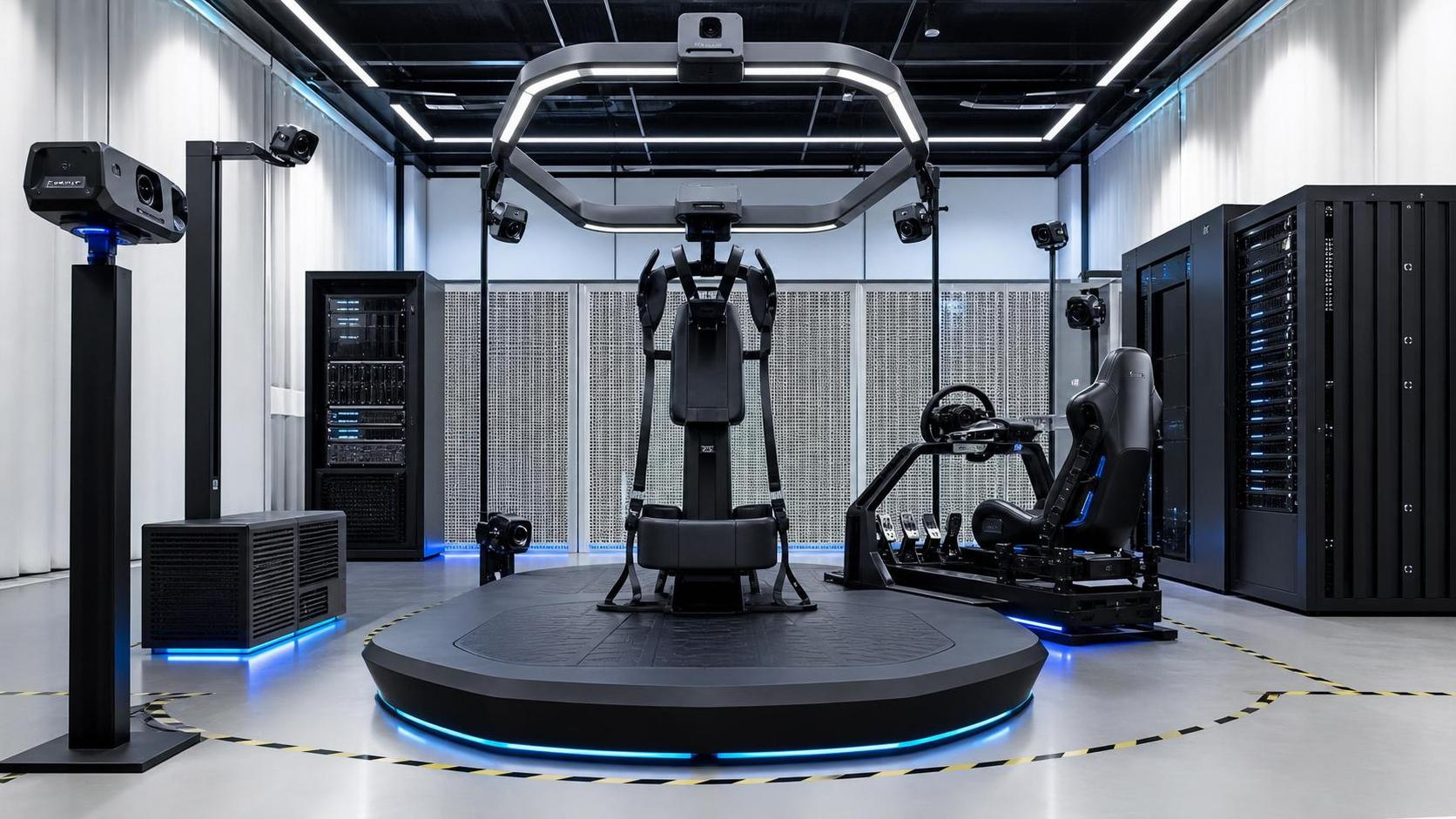
Free-roam VR commercial applications create shared adventures inside mapped physical zones, often supported by ceiling tracking and backpack computing.
Their throughput advantage comes from group ticketing. Four to eight players can enter one session, finish together, and rebook together.
When layout, briefing, and sanitation workflows are optimized, free-roam formats can process steady traffic without feeling rushed.
Motion VR and E-Sports Simulators
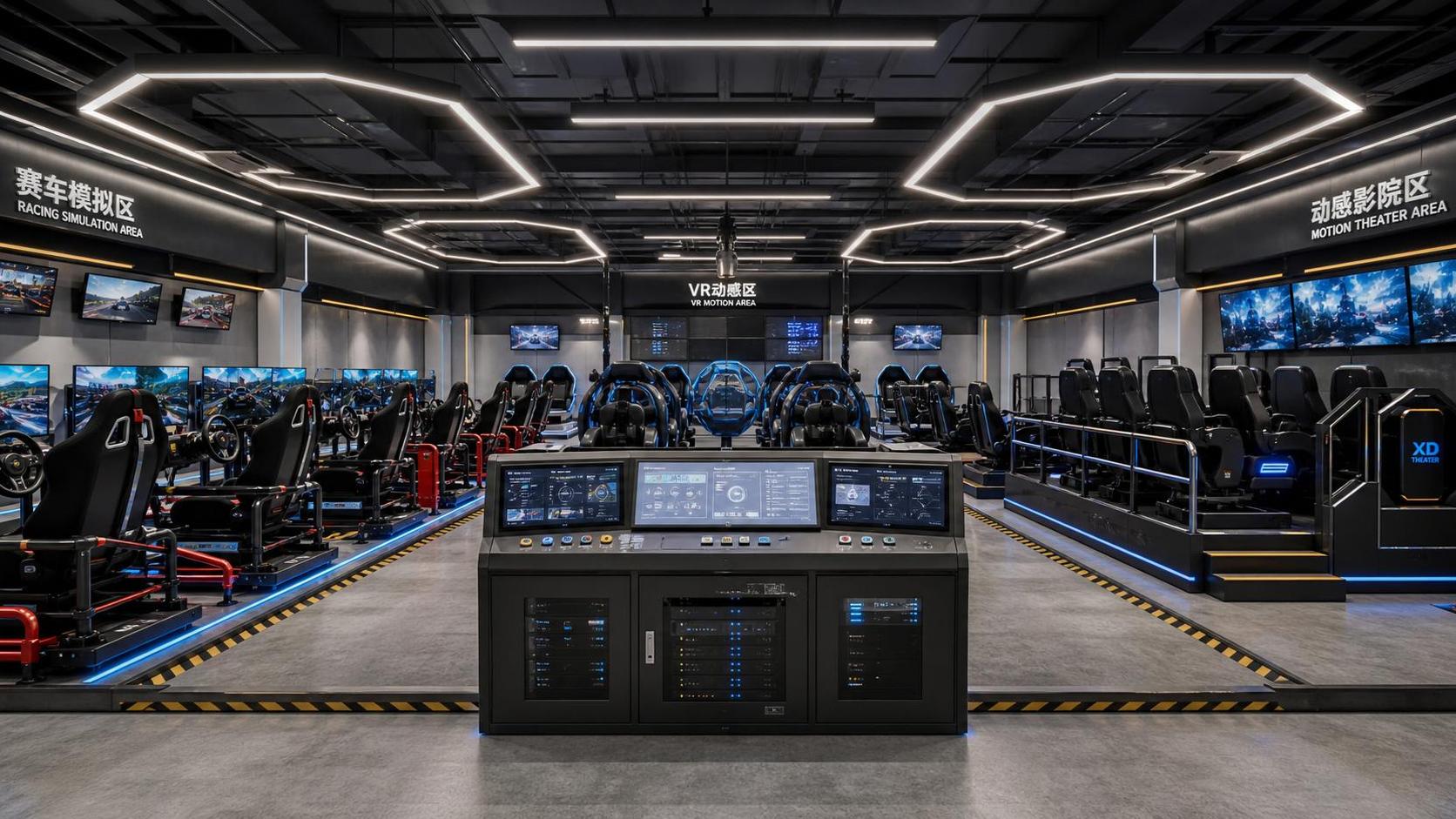
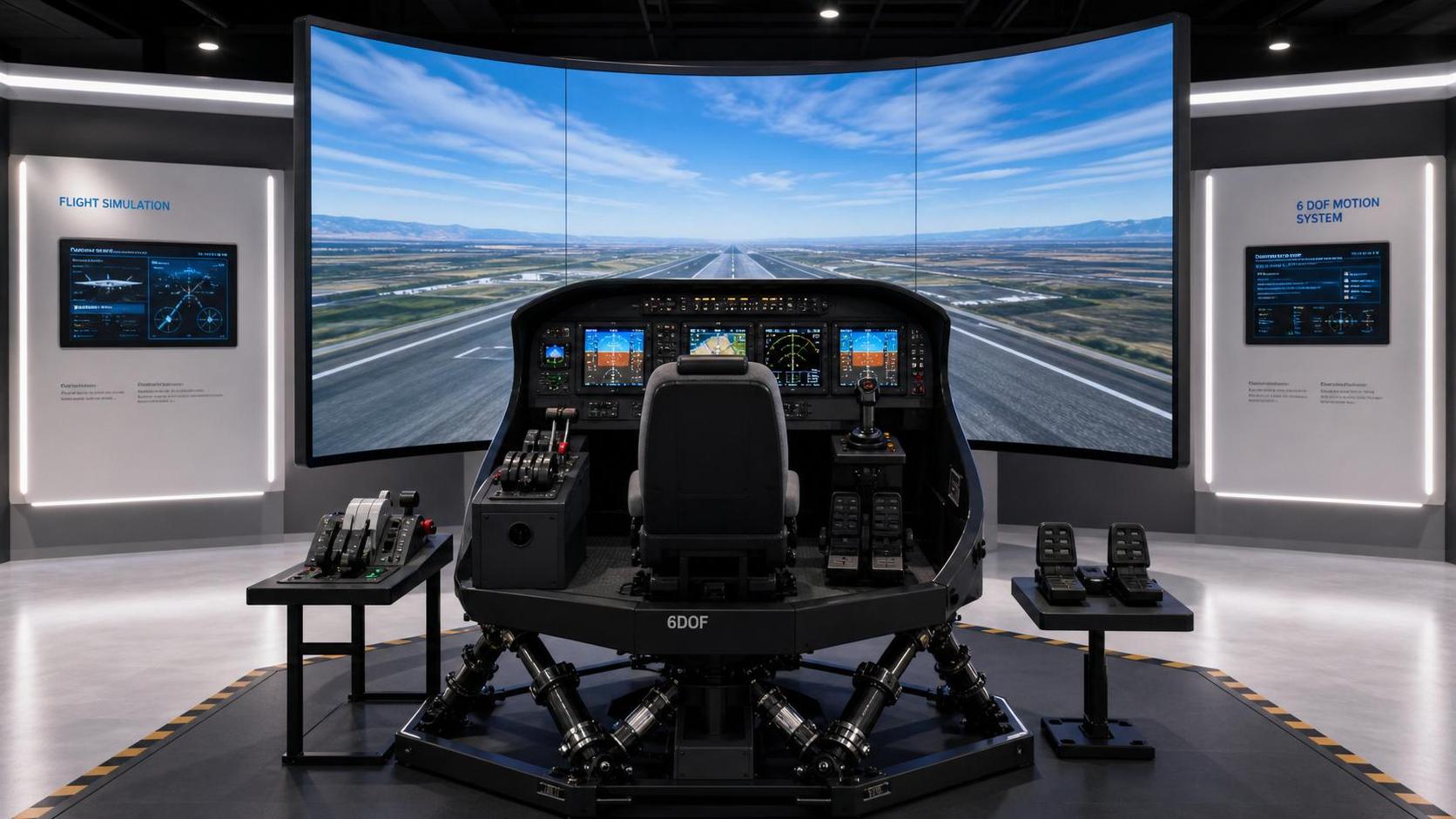
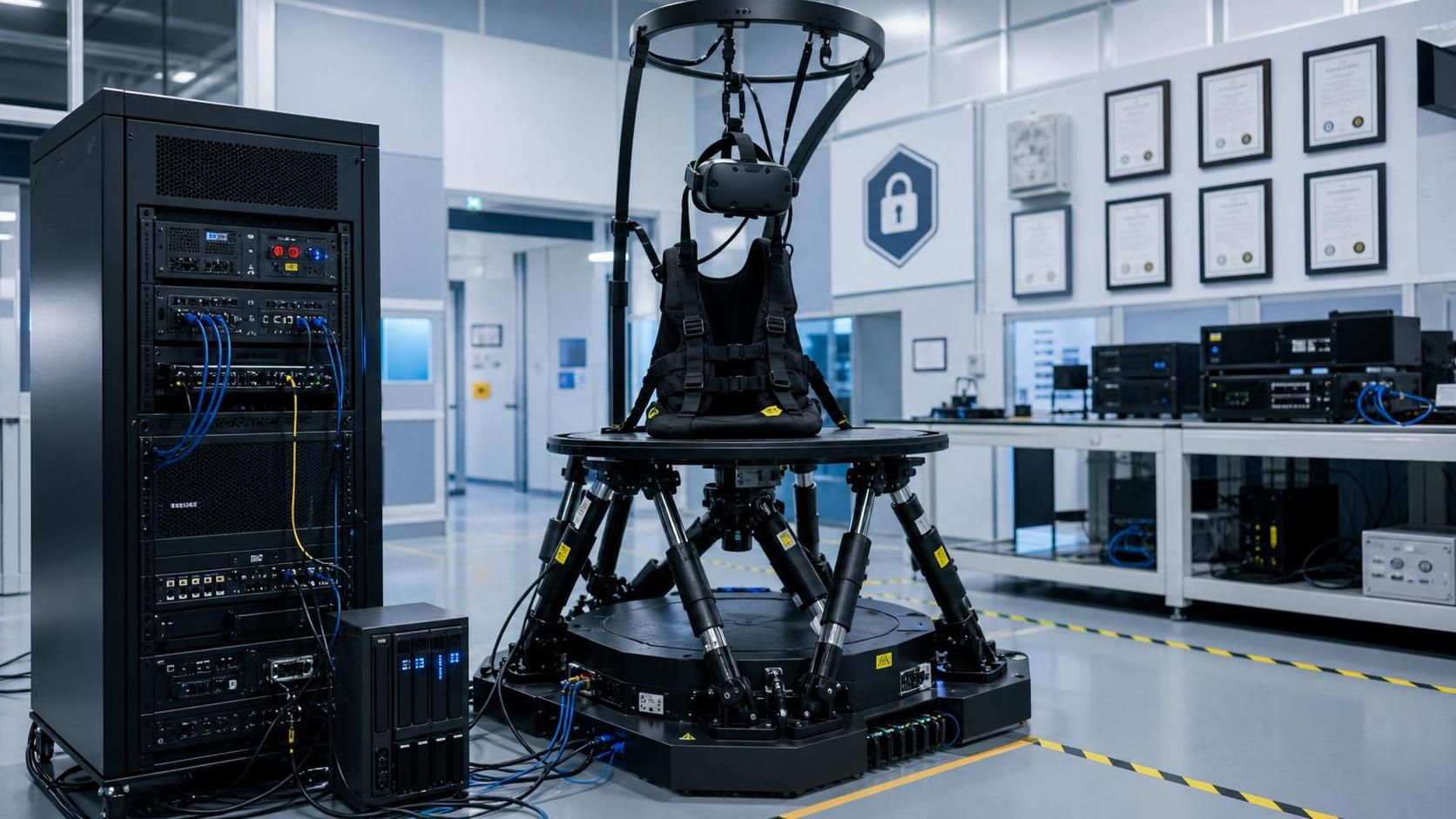
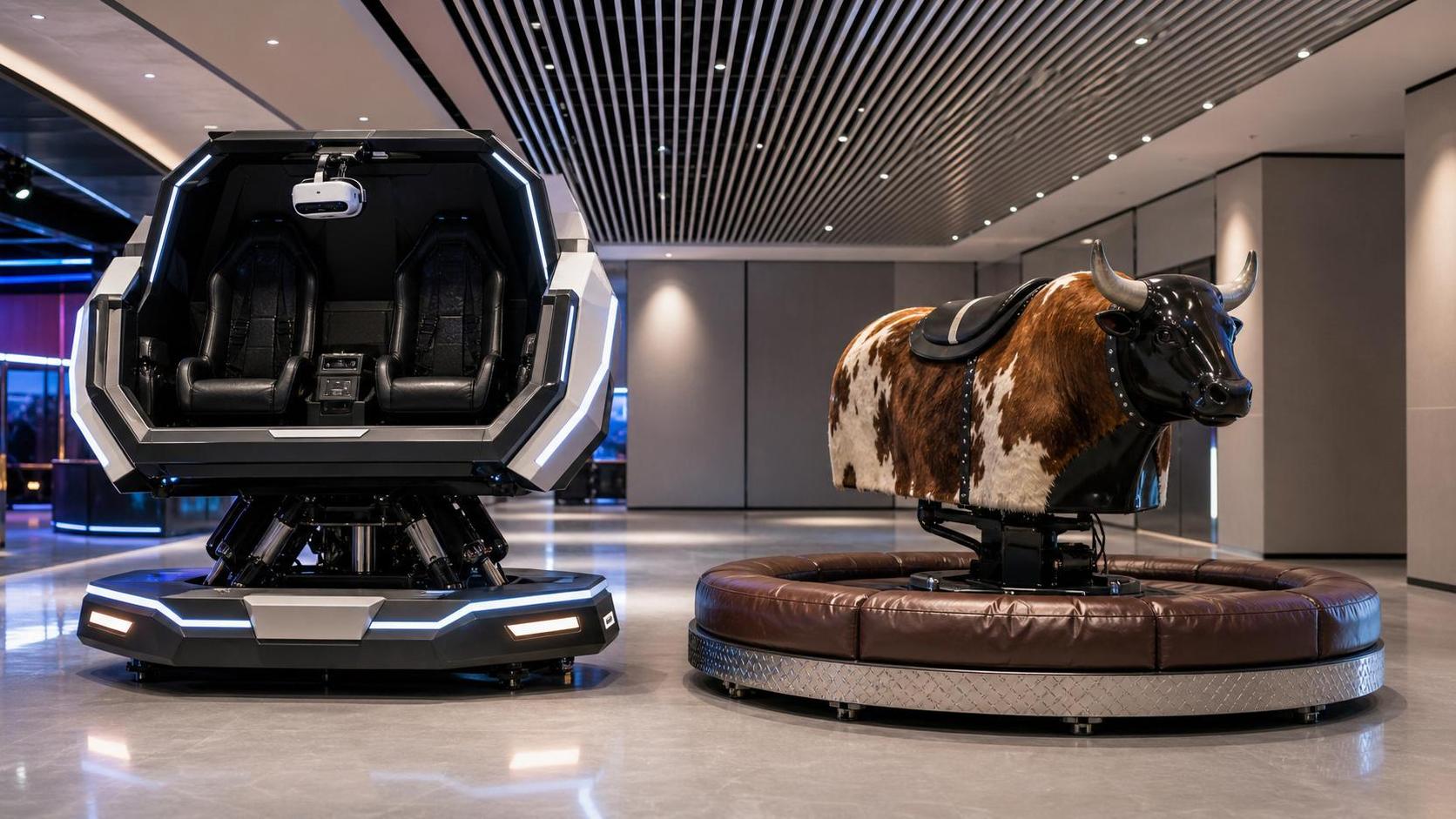
Motion-based VR commercial applications combine head-mounted visuals with servo platforms, direct-drive steering, haptic seats, or 6-DOF motion bases.
The business value lies in premium pricing. Compact simulator footprints can command higher rates than traditional arcade cabinets.
Racing, flight, mech combat, and space experiences benefit from strong physical feedback and repeatable competitive scoring.
Location-Based VR Booths
Booth-style VR commercial applications are easier to deploy in smaller venues, corridors, cinema lobbies, and hybrid amusement areas.
Their advantage is modular scaling. Operators can add or remove stations according to traffic patterns and seasonal demand.
Mixed Reality Sports and Training
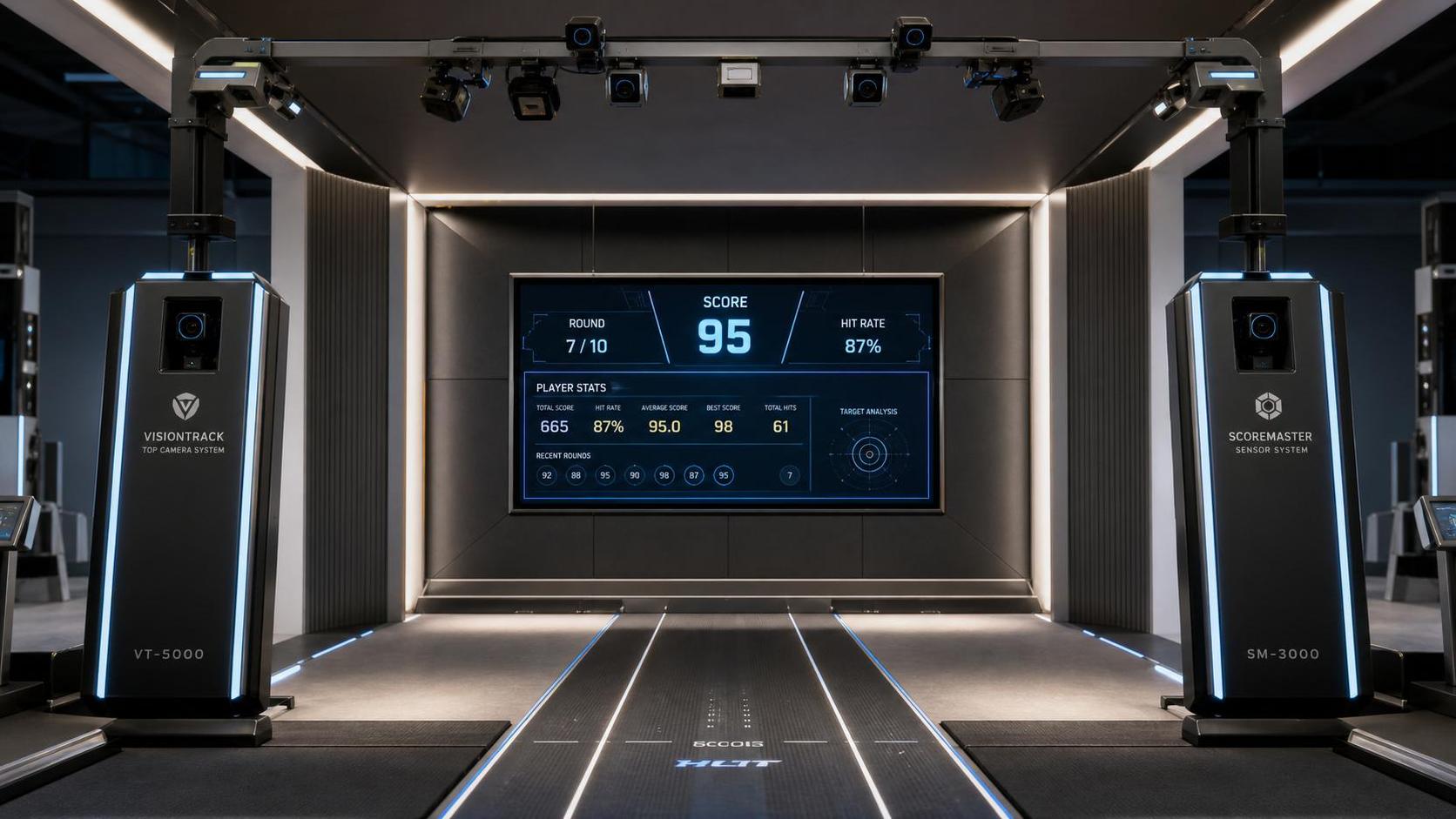
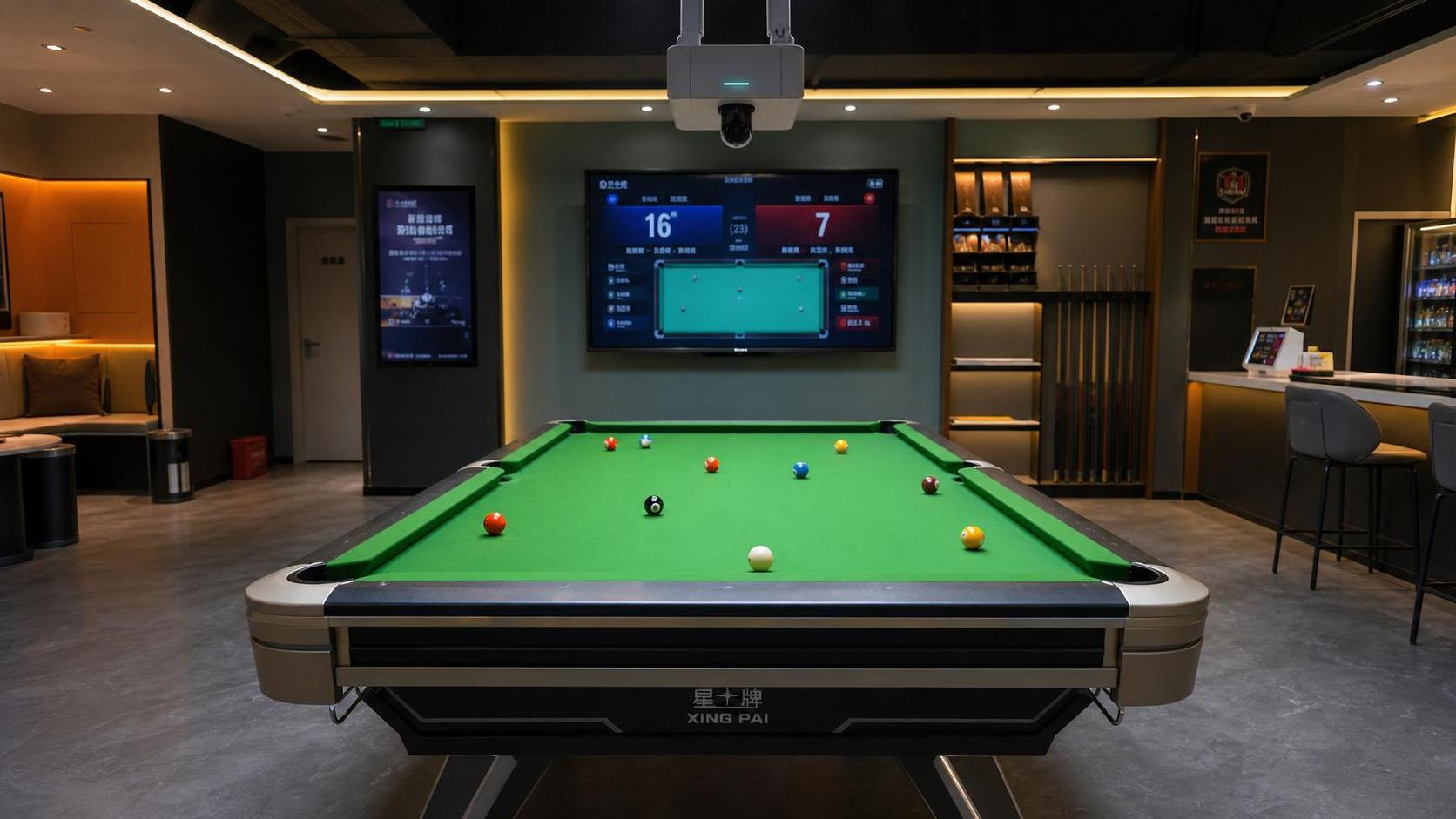
Some VR commercial applications overlap with digital sports, using cameras, sensors, and projection to extend physical gameplay.
These formats support golf, baseball, archery, fitness battles, and skill challenges that remain active during bad weather.
Business Value Beyond Visual Immersion
Strong VR commercial applications generate value across ticketing, customer movement, equipment utilization, and data-driven operations.
The most important metric is not headset novelty. It is the relationship between paid minutes and unproductive minutes.
- Higher yield: immersive formats justify premium session pricing.
- Better space use: compact systems monetize dense indoor footprints.
- Repeat visits: leaderboards and missions create progression loops.
- Operational clarity: timed sessions simplify capacity planning.
- Cross-selling: VR pairs well with prizes, food, darts, and simulators.
A well-planned VR zone also supports birthday packages, corporate play, school visits, tournament nights, and private bookings.
These commercial layers help VR commercial applications defend ROI even when footfall varies by weekday or season.
Operational Design Factors That Affect Throughput
Throughput is created before the headset turns on. Poor queue design can reduce capacity even when hardware is advanced.
Venues should evaluate VR commercial applications using practical constraints, not only content trailers or hardware specifications.
High-performing VR commercial applications often use booking screens, timed alerts, staff dashboards, and automated session recovery tools.
Integration With Broader Amusement Revenue Engines
VR should not operate as an isolated island. It performs better when connected to the venue’s full spending journey.
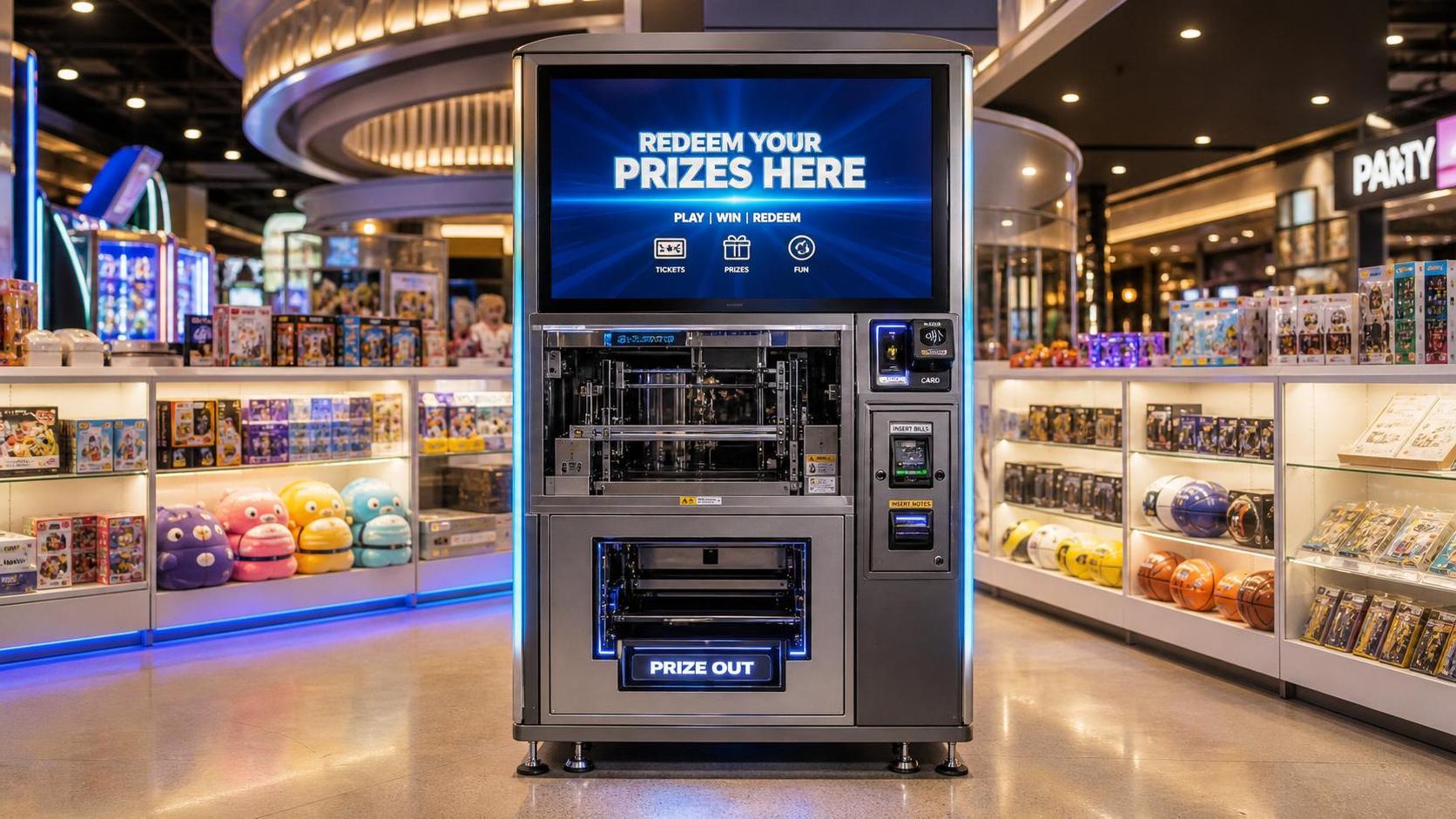
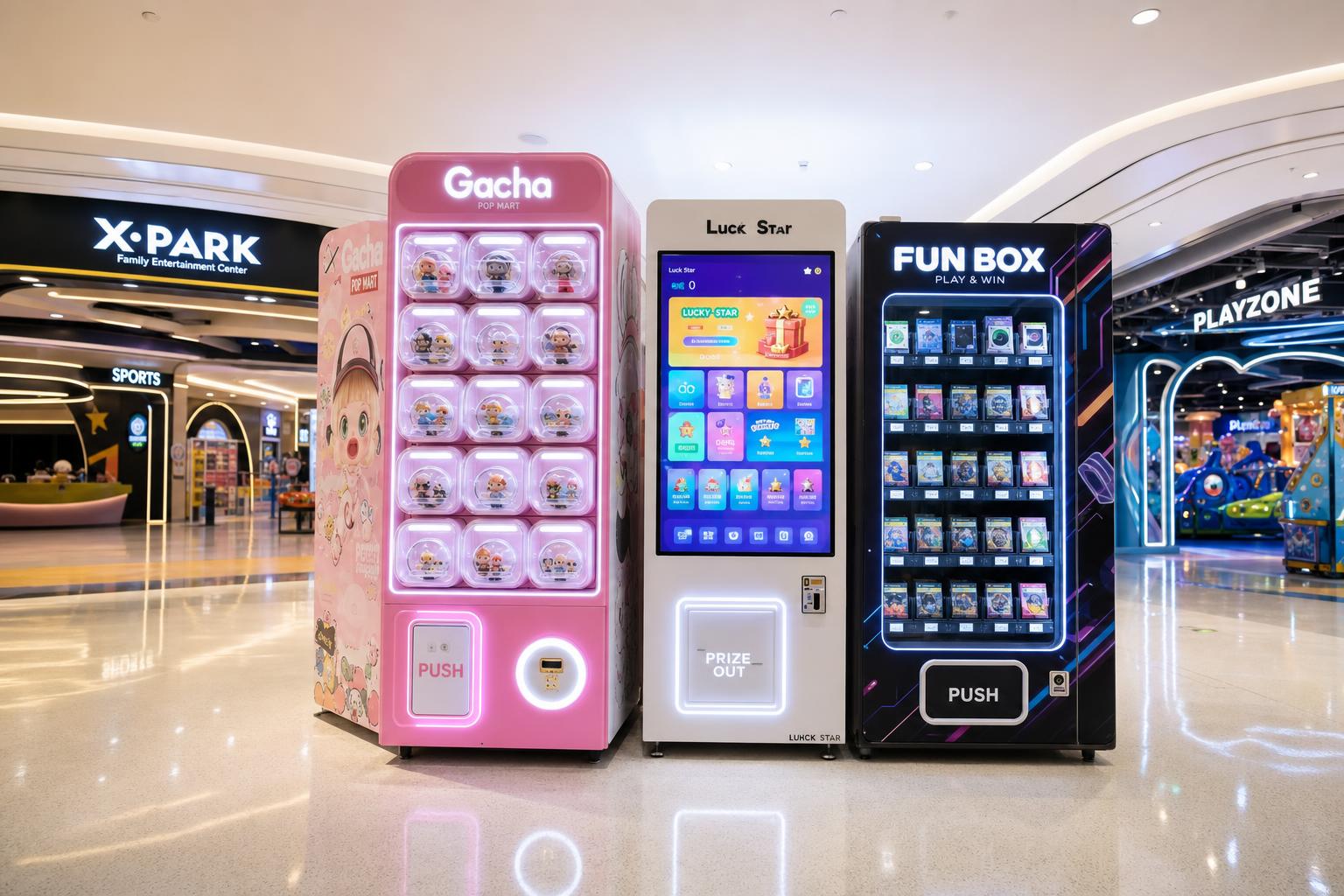
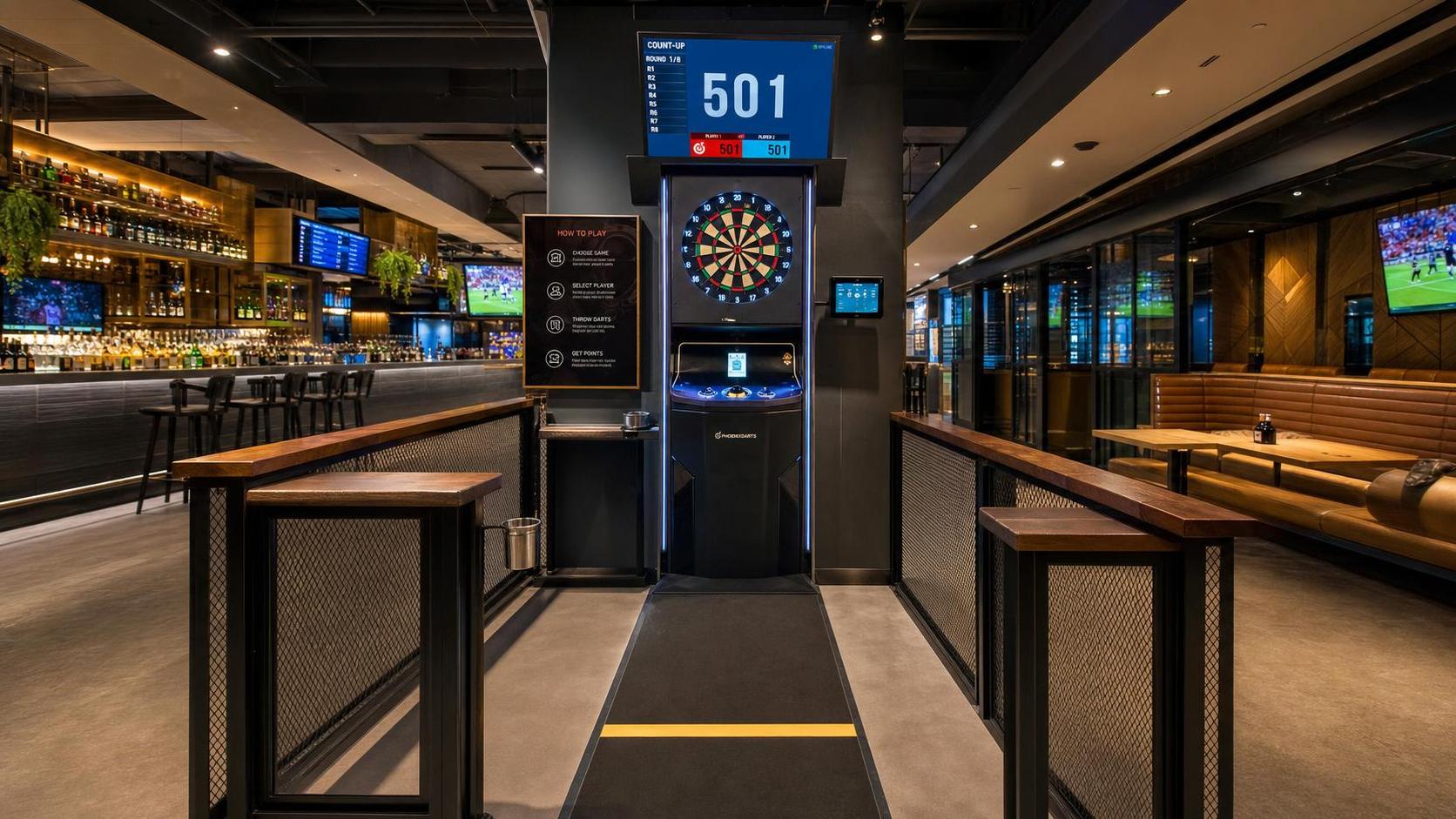
Prize machines can capture post-VR excitement. Digital darts can retain groups after intense immersive sessions.
Racing simulators can support tournament ladders. Indoor sports simulators can serve higher-spending social visitors.
In this ecosystem, VR commercial applications act as emotional anchors that draw attention and stimulate surrounding purchases.
CIAS often frames this as a traffic-engine stack: attraction, conversion, retention, replay, and operational intelligence.
- Attraction: visible VR scenes create curiosity.
- Conversion: clear pricing reduces hesitation.
- Retention: social zones keep groups inside.
- Replay: scores and missions encourage returns.
- Intelligence: data reveals peak usage patterns.
Practical Deployment Recommendations
Before purchasing VR commercial applications, venues should model hourly capacity under realistic peak conditions.
The model should include ticketing, briefing, fitting, gameplay, exit, cleaning, and exception handling.
- Define the target session length and hourly player count.
- Match content intensity with local audience behavior.
- Reserve enough space for waiting and equipment exchange.
- Verify maintenance access before final layout approval.
- Test tracking stability during real operating hours.
- Train staff to recover sessions without long delays.
Safety and compliance also matter. Electrical certification, privacy handling, player consent, and local accessibility rules require early review.
Commercial-grade planning reduces the risk that impressive hardware becomes a bottleneck during peak footfall.
Performance Metrics for Ongoing Evaluation
After launch, VR commercial applications should be measured continuously. Venue decisions improve when data replaces guesswork.
These indicators help identify whether pricing, layout, staffing, or content rotation needs adjustment.
Next Steps for Venue-Ready VR Planning
VR commercial applications can improve venue throughput when selected as operational assets, not just entertainment novelties.
The best deployments connect immersive content with queue design, durable hardware, staff workflow, data tracking, and complementary attractions.
A practical next step is to map the intended player journey from entrance to exit, then calculate every paid and unpaid minute.
CIAS focuses on this intersection of mechatronics, commercial logic, and indoor amusement intelligence.
For future-ready venues, VR commercial applications should be evaluated by immersion quality and by their ability to keep traffic moving profitably.
Related News
 6-DOF Racing SimulatorsHigh-Immersion Racing Simulators: Core Specs That Matter Before You BuyHigh-immersion racing simulators: compare force feedback, motion stability, visuals, software, and durability to choose a commercial system that boosts uptime, guest appeal, and ROI.
 Global Network DartboardsHow to Evaluate a Social Gaming Platform Supplier for Venue Launch and Scale-UpSocial gaming platform supplier evaluation guide: learn how to compare launch readiness, integration, uptime, reporting, and scalability to choose a partner that supports cleaner openings and profitable venue growth.
 Multiplayer VR Free-RoamImmersive Entertainment Venues: Which Formats Fit FECs, Malls, and Tourist Sites?Immersive entertainment venues for FECs, malls, and tourist sites: compare VR, simulators, and digital sports to find the best fit for traffic, dwell time, and ROI.
 Spatial Computing & 6-DOFHow Smart Simulator Control Works in Multi-Zone Venues: Key Functions and Integration PointsSmart simulator control powers multi-zone venues by syncing motion, content, safety, payments, and cloud monitoring. Discover the key functions and integrations that drive uptime, efficiency, and scalable ROI.
 FEC Capital & Yield per Sq.FtAmusement Equipment Service Cost Breakdown: What Operators Should Budget ForAmusement equipment service cost explained: learn what operators should budget for, from preventive maintenance and parts to software support, compliance, and downtime risk.
 Naked-eye 3D & HologramCommercial 128-Card Node Signals New Spec PressureCommercial 128-Card Node signals new spec pressure for AI glasses, naked-eye 3D, and hologram exports. Explore latency, power, and compliance shifts shaping procurement and delivery.
 Spatial Computing & 6-DOFUS-Iran Fund Signals Middle East VR Buying ShiftUS-Iran fund signals a Middle East buying shift for Multiplayer VR Free-Roam, 6-DOF Racing Simulators, and Spatial Computing & 6-DOF systems. See what suppliers should prepare now.
 IoT Crane Claw MachinesEU-US Trade Deal Clears, Lower Tariff Pressure for IoT Amusement ExportsEU-US trade deal updates may ease tariff pressure for IoT amusement exports. Learn how smarter compliance, routing, and pricing strategies can improve EU market access and margins.
 Flight & Mech SimulatorsHigh-Immersion Simulators vs Standard Rigs: Which Setup Fits Commercial VR Entertainment?High-immersion simulators vs standard rigs: discover which setup delivers better ROI, throughput, and guest appeal for commercial VR entertainment venues.
 Interactive Prize VendingPrecision Prize Dispensing Explained: What Affects Accuracy, Jams, and Payout ConsistencyPrecision prize dispensing explained: learn what drives accuracy, causes jams, and affects payout consistency, with practical fixes to improve reliability and reduce service issues.
 Millimeter-wave Indoor GolfHow to Evaluate a Radar Tracking Systems Manufacturer for Indoor Sports Tech ProjectsRadar tracking systems manufacturer selection starts with data accuracy, integration, and support. Learn how to compare suppliers for indoor sports tech projects and reduce deployment risk.
 CE/FCC & IoT Data SecurityDigital Entertainment Systems in Europe: Key Compliance and Localization FactorsDigital entertainment systems Europe require more than a strong demo. Explore CE, GDPR, localization, payments, and uptime factors that shape smoother market entry and stronger venue ROI.
 Interactive Prize VendingHow to Choose Automatic Prize Terminals for Arcades, FECs, and Retail VenuesAutomatic prize terminals buying guide for arcades, FECs, and retail venues. Learn how to compare ROI, uptime, payout control, compliance, and supplier support.
 Gachapon & Blind Box KiosksRCEP Demand Lifts China IoT Amusement Device ImportsRCEP demand lifts China IoT amusement device imports as localized payment-ready kiosks gain traction. See what this means for exporters, buyers, and after-sales execution.
 IoT Crane Claw MachinesShanghai VAT Pilot Reshapes Export Tax WorkflowsShanghai VAT pilot reshapes export tax workflows with faster refund review, tighter document checks, and digital VAT filing updates for smart equipment exporters.
 CE/FCC & IoT Data SecurityChina Sets AI Telecom Rules for VR Data ComplianceChina Sets AI Telecom Rules for VR Data Compliance: explore how new China AI telecom rules affect VR exports, biometric data, cloud logs, and CE/FCC readiness for global markets.
 Flight & Mech SimulatorsFlight Cockpit Simulation Systems Explained: Motion, Visuals, and Control OptionsFlight cockpit simulation systems explained: compare motion platforms, visual setups, and control options to choose immersive, reliable solutions that boost venue appeal and ROI.
 CE/FCC & IoT Data SecuritySmart IoT Arcade Control for Multi-Game Venues: Key Functions and Integration TipsSmart IoT arcade control helps multi-game venues unify monitoring, cashless payments, alarms, and analytics. Discover key functions and integration tips to scale with less downtime.
 Global Network DartboardsCamera Scoring System vs Sensor Scoring: Which Setup Fits Your Venue Better?Camera scoring system or sensor scoring—which suits your venue best? Compare accuracy, maintenance, analytics, and ROI to choose a smarter, higher-performing setup.
 Interactive Prize VendingAutomatic Prize Terminals Price Breakdown: What Drives Cost and ROIAutomatic prize terminals price explained: discover the real cost drivers, hidden expenses, and ROI factors that help venues choose smarter, more profitable machines.
 Direct Drive Wheels & PedalsHow to Choose Esports Entertainment Equipment With Force Feedback for ArcadesEsports Entertainment Equipment force feedback buying guide for arcades: compare durability, software, safety, and total cost to choose immersive systems that boost uptime and revenue.
 6-DOF Racing SimulatorsMIIT Seeks Comments on AI Telecom Rules for VR DevicesMIIT seeks comments on AI telecom rules for VR devices, signaling new compliance checks for connected VR and 6-DOF systems. See what manufacturers, buyers, and service teams should prepare before July 18.
 Gachapon & Blind Box KiosksRCEP Imports of China IoT Entertainment Devices Rise 19.7% in MayRCEP imports of China IoT entertainment devices rose 19.7% in May, led by Gachapon, blind box kiosks, and prize vending. See what this means for buyers, exporters, and FEC upgrades.
 Global Network DartboardsNetworked Dart Systems for Bars: Must-Have Features, Space Planning, and Staff WorkflowNetworked dart systems for bars: discover must-have features, smart space planning, and smoother staff workflows to boost uptime, guest engagement, and venue ROI before you buy.
 Flight & Mech SimulatorsNext-Generation VR Simulators vs Traditional Rides: Which Fits Your Venue and Budget?Next-generation VR simulators vs traditional rides: compare cost, space, maintenance, and ROI to find the best-fit attraction for your venue, audience, and budget.
 Precision Slate Billiard TablesCamera Scoring for Billiards: How It Works, Accuracy Limits, and Table Setup BasicsCamera scoring for billiards explained: learn how it works, where accuracy limits appear, and which table setup basics improve reliable scoring before you buy.
 Interactive Prize VendingHow to Evaluate an Interactive Prize Systems Manufacturer for Uptime, Compliance, and ROIInteractive prize systems manufacturer selection starts with uptime, compliance, and ROI. Learn what to check before rollout to reduce downtime, control risk, and improve venue returns.
 FEC Capital & Yield per Sq.FtArcade Market Trends: What Is Driving Revenue Growth in FECs and Social Entertainment?Arcade market trends reveal what is driving revenue growth in FECs and social entertainment, from cashless systems and IoT monitoring to premium, replayable experiences.
 6-DOF Racing SimulatorsChina Seeks Comments on AI Telecom Data Rules for VRChina Seeks Comments on AI Telecom Data Rules for VR: learn how the draft could reshape VR devices, data minimization, localized storage, and cross-border compliance before the July 5 deadline.
 Gachapon & Blind Box KiosksRCEP Five Markets Lift China IoT Entertainment Imports 19.7% in MayRCEP markets boost China IoT entertainment imports 19.7% in May, led by Gachapon & Blind Box Kiosks and Interactive Prize Vending. Explore key demand shifts and trade opportunities.

Related News
- 00
0000-00
High-Immersion Racing Simulators: Core Specs That Matter Before You Buy - 00
0000-00
How to Evaluate a Social Gaming Platform Supplier for Venue Launch and Scale-Up - 00
0000-00
Immersive Entertainment Venues: Which Formats Fit FECs, Malls, and Tourist Sites? - 00
0000-00
How Smart Simulator Control Works in Multi-Zone Venues: Key Functions and Integration Points - 00
0000-00
Amusement Equipment Service Cost Breakdown: What Operators Should Budget For
VR Spatial Computing Fellow
Strategic Intelligence Center